

School roofing in Bellevue needs safe access, leak tracing and work windows around students and staff. We inspect and document repair options.
A ceiling leak during the school day can send staff looking for buckets while classes continue nearby. The first step is to locate the affected room, protect the area under the school’s direction and inspect the roof detail above it. In Bellevue, months of cool-season rain can expose a loose lap, blocked drain or failed curb flashing. We trace the reported location, check the nearby roof surface and record what is confirmed so the facilities contact can plan a repair without guessing at the boundary. School roofs sit among different neighborhood patterns. Northeast Bellevue includes established residential areas and schools near the Overlake urban center, while Bridle Trails includes schools and public facilities near SR 520 and I-405. Each campus has its own entry rules, student schedule and access limits. We ask about arrival times, events, playgrounds, bus lanes and restricted areas before setting a visit. Then we compare commercial roof repair with larger work only after seeing the assembly. | 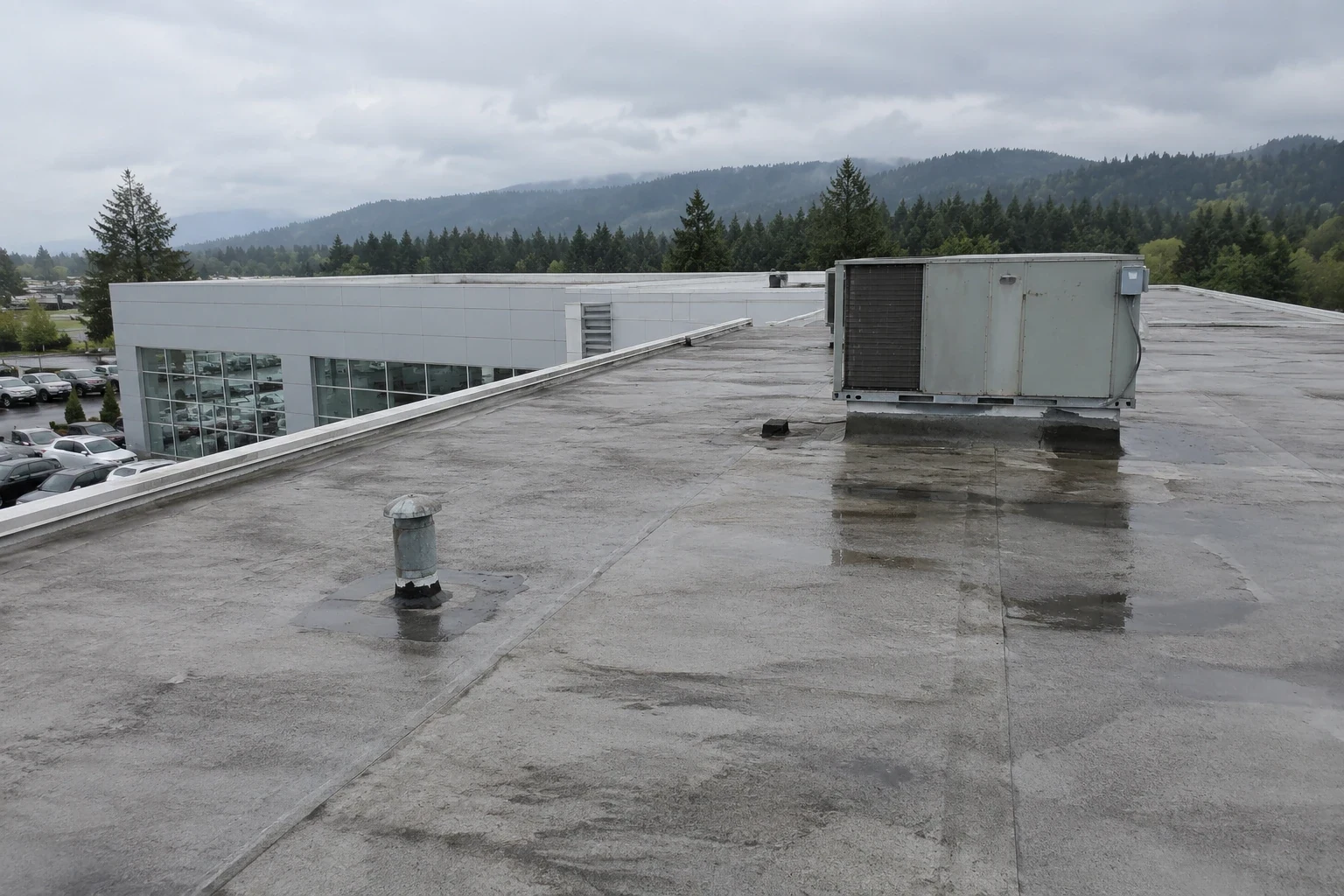 |
Follow the Leak from Room to Roof
The place where a ceiling tile darkens may not sit directly below the opening. Water can move across a deck or insulation before showing inside, so we ask when the leak occurs and whether it affects one room or several. With an approved roof plan, we match the interior location to drains, seams, curbs and wall transitions. We photograph the relevant details and note what could not be reached, giving staff a practical record for follow-up.
At the surface, we look for an open seam, puncture, separated flashing, debris near a drain or previous patch that has lifted. A stain alone does not prove the entire roof is wet. If the assembly condition would change the work, we explain whether a test opening is useful and where it could be placed. We do not open a roof section until the school contact has reviewed the plan. For broader aging or repeated leaks, a replacement evaluation begins with the same documented observations.
Set a Safe Repair Area
A small repair near one classroom may be straightforward, while several wet areas can point to a larger problem. We inspect around the defect and check adjacent seams, flashing and moisture indicators before setting the boundary. If the surrounding assembly is sound, a local patch may be enough. If test results show wet insulation or recurring failures extend across a roof zone, we explain the added area and what evidence supports it. School staff can then plan work around the affected rooms.
For a recover, the existing layers need to be stable, dry enough and properly attached, with room at drains, edges and rooftop equipment for the new height. If removal is needed, the scope should identify tear-off limits, deck review and a secure dry-in point. A higher-occupancy medical campus has different access needs, as in hospital roofing; a college building may have a different calendar and multi-building plan, as discussed in college and university roofing. The school’s roof condition and access rules guide the sequence.
Check Drains and Rooftop Details
School roofs can have vents, mechanical units, skylights and service paths that have changed as classrooms and building systems were updated. We inspect flashing around penetrations, look for loose edges and note where repeated foot traffic crosses the membrane. Drains and overflow routes are checked for debris, low areas and signs of water that remains after rain. A drain issue may contribute to a leak even when the visible defect is elsewhere.
When a new layer or replacement is considered, the finished height must work at drain bowls, parapets and curbs. We review the existing build-up and point out where testing is needed before final design. If drainage needs a separate repair, our drain and scupper work can be coordinated with the membrane scope. We identify any required access to rooftop units so the school can arrange a facilities technician rather than leaving that coordination until the crew arrives.
Schedule Around Students and School Use
Before work, we confirm whether the campus is open, which gates and roof routes are approved, where tools can be staged and how crews check in. The facilities contact identifies arrival and dismissal times, bus traffic, outdoor play areas, events and rooms that cannot take noise or dust. Work can be divided into sections with a planned dry-in and end-of-day inspection. If weather changes, each open section needs a safe stopping point and a clear handoff to the school.
Northeast Bellevue has schools within established neighborhoods and lies near Overlake and the Redmond light-rail station. Bridle Trails is bordered by regional roads and includes public facilities. Those surroundings can affect parking and deliveries, but the school’s own operations plan controls access. For a Northeast Bellevue roof visit, we confirm the school contact, approved entry time and any escort requirement before the crew arrives.
Leave Clear Notes for Facilities Staff
Closeout should connect the roof repair with the room or zone that prompted the call. We provide photos, identify the defect and work limit, and state whether insulation or deck conditions were tested. If part of the roof needs observation, the report names the location so school staff can check it after future rain. Clear notes help a different facilities employee or contractor understand what was done without repeating the original search.
A roof condition report can help compare classrooms, wings or separate buildings when the district is planning work across a campus. If the roof needs replacement, we can review systems such as TPO roofing after confirming deck, attachment, drainage and building use. Send the Bellevue address, room location, campus calendar, roof plan and prior repair notes. We will document what the inspection confirms and set out the next practical step.
Commercial Roofing Questions
Can school roof repairs happen while classes are in session?
Some inspections and contained repairs can be scheduled during school hours if the campus approves access and staging. The facilities contact identifies student routes, quiet areas and restricted spaces. Larger work may fit better during a break or another agreed window.
How do you locate a school roof leak?
We start with the room or area staff identify, then inspect the roof details above and around it. The entry point may be offset from the ceiling mark. We record what is visible and explain when testing is needed to confirm wet insulation or deck conditions.
Does a leak over one classroom mean the whole roof needs replacement?
Not necessarily. We check the nearby membrane, seams and flashing to see whether the failure is localized. If more areas show similar damage or testing finds moisture beyond the first spot, we explain that evidence and the broader options.
What should a school share before the inspection?
Provide the Bellevue address, affected room, campus calendar, roof access rules and any available roof plan or repair history. Tell us about student arrival, dismissal, outdoor activities and restricted areas. We will confirm the route and work window with the facilities contact.
How do you keep the school informed during roof work?
We identify the daily work area, expected access path and stopping point with the school contact before mobilization. The crew follows the agreed plan and reports any condition that could change the scope. The facilities team remains the channel for notices to staff and families.