

A Bellevue commercial roof inspection documents seams, drains, flashing and access limits so managers can set repair priorities before the next wet season.
A roof walk through the Spring District can start at a service hatch and continue around curbs, drains and membrane laps. The useful result is more than a list of defects: it connects a visible condition to a location and next step. We photograph roof zones, check drainage and flashing, note access limits and separate confirmed repair needs from areas that require testing. That gives a Bellevue property manager a record that can guide a work order or capital discussion. Cool-season moisture is a recurring regional condition. Nearby Sea-Tac normals show much higher precipitation in January than July, so a dry summer visit should still include drain bowls, overflow routes and details that may remain wet under repeated rain. Downtown Bellevue’s towers and Eastgate office properties also have distinct access and operating patterns. We confirm roof access and inspection purpose before arrival, then tailor the route to the building. | 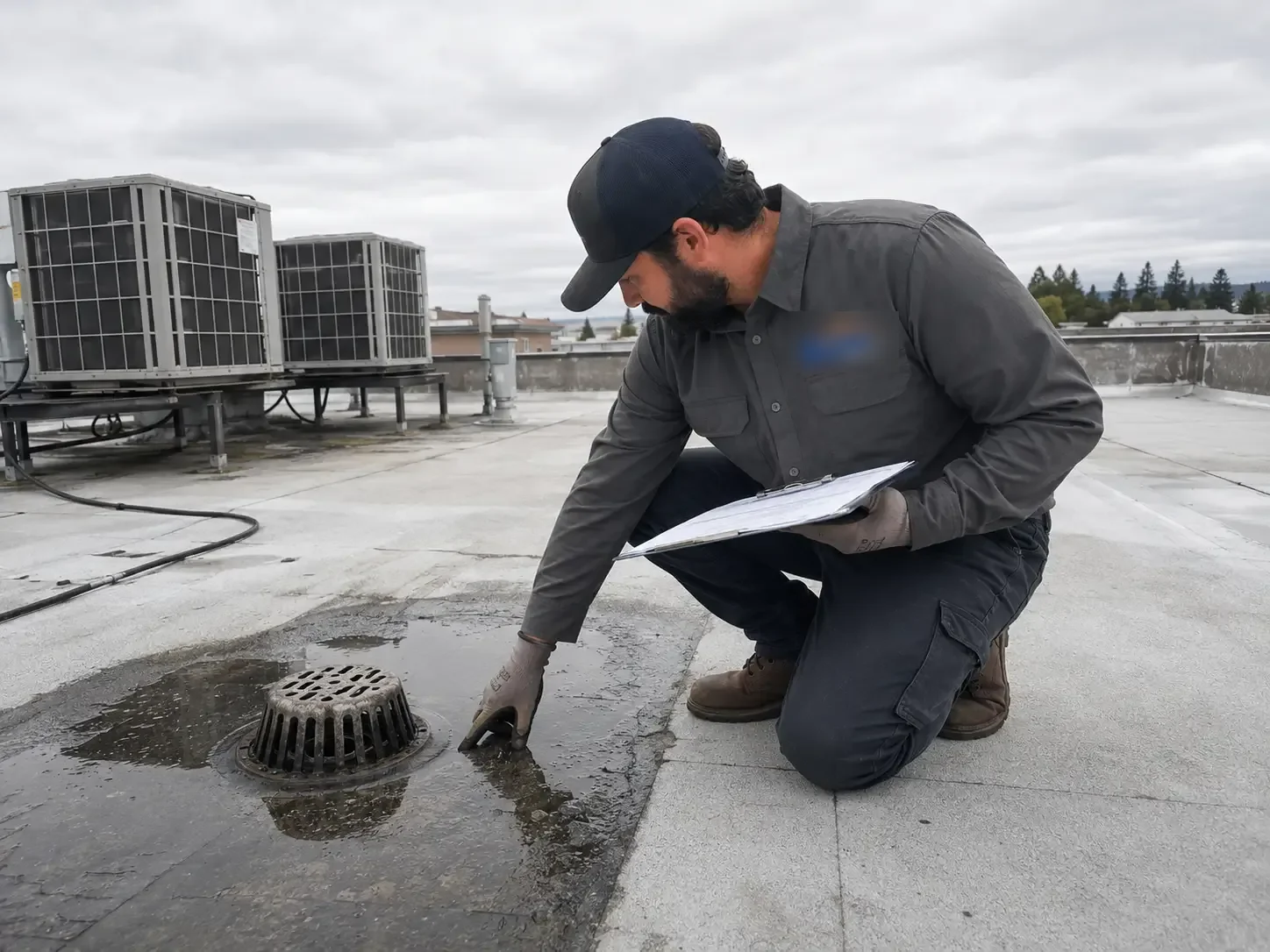 |
Work Through Each Roof Zone
We identify accessible sections and inspect the field membrane, seams, penetrations, edge metal, parapet corners, rooftop equipment and prior repairs. Each observation gets a photo and roof reference. Where one seam has lifted, we check nearby laps and terminations instead of recording only the loose edge. This helps the owner tell whether the issue is isolated or part of a repeated detail.
Drainage gets a separate check. We look at strainers, drain bowls, scuppers, overflow points, slopes and debris that can slow water movement. Ponding that remains long after rain may reflect slope or obstruction, while short-lived water after a storm needs context. The report states what was visible during the visit and whether a follow-up observation is needed to understand how the roof drains.
A roof walk does not confirm concealed insulation condition. Soft membrane, staining or a leak history can prompt a test opening, but the report identifies that as a next step rather than a proven wet area. If broad sections need screening, a targeted infrared moisture survey can direct selected openings. Each method is tied to the question it can answer.
Read Bellevue’s Wet Season
Sea-Tac normals are a nearby lowland proxy, with 39.34 inches of normal annual precipitation and most monthly rainfall concentrated in the cool part of the year. That context makes drainage and wet insulation useful inspection priorities. It does not establish that water has entered a particular Bellevue roof. We record observed moisture, open transitions and ponding separately from climate exposure.
Average winter temperatures near the low 40s and measurable snowfall mean roof details can experience moisture and occasional freezing. We check sealant, metal edges and membrane terminations for visible movement or separation. Snowfall is modest compared with a heavy-snow region, so a building’s design criteria govern load questions. The inspection records actual conditions and refers structural questions to the appropriate project review.
Summer’s comparatively dry pattern can offer a longer repair window, but it does not make a summer inspection comprehensive by itself. We check vulnerable details before the wet season and note which items can be corrected while access is straightforward. If rain behavior is unclear, we ask the manager when ponding appears, how long it remains and whether interior symptoms align with the same roof area.
Make the Report Useful
Each finding should answer four questions: what was observed, where it is, why it matters and what should happen next. We separate active leak response, repair, maintenance and additional testing. A photo of a seam or drain is paired with a zone name so a crew can return to the same detail. Where an area was blocked by equipment or access rules, the report says it was not checked.
Work items may be grouped by access or trade. A localized flashing repair may fit one visit; drain work, equipment relocation or interior access may need a separate sequence. The report can list assumptions about the membrane, hidden insulation and deck condition. If opening the roof is required to price the work, we show that uncertainty and explain how the test will affect the boundary.
For a portfolio manager with properties in Crossroads and Wilburton, consistent records help compare urgency without assuming identical roof systems. Crossroads includes retail, restaurants and apartments. Wilburton is a redevelopment area planned for office, medical, retail and hotel uses. We ground each report in the observed property and keep district facts from becoming claims about an individual roof.
Choose Inspection Depth
A hands-on inspection is useful when the decision involves flashing, seams, surface condition or visible drainage. For a repair priority, our repair assessment can identify the work boundary. A drone survey can help map a large roof or difficult access area, but it cannot test adhesion. Suspected wet insulation may need infrared screening followed by test openings. We clarify the question before scheduling and state which methods are included.
For a maintenance review, we can note debris, drain condition, developing seam edges and access needs. A leak assessment follows the water path around a reported room. A pre-project review can focus on the existing assembly, test openings and transitions that affect replacement or recover. These scopes should not be merged without explanation; each should produce findings the manager can act on.
Project review follows Bellevue’s 2021 code set, which took effect March 15, 2024, plus applicable state and municipal amendments. Permit or design review depends on the work being considered. We record roof conditions and identify where a proposed change may need separate project review. The inspection itself does not declare a roof code-compliant based solely on a surface walk.
Plan Access and Follow-Up
We review the report with the building contact, confirm repair boundaries and identify any testing or access still needed. If weather, equipment or tenant restrictions prevented a complete walk, that limitation stays attached to the section. The manager can then decide whether to schedule repairs, authorize openings or monitor a stable condition on a defined date.
BelRed and the Spring District include office, institutional and mixed-use development served by transit. Roof work at an occupied property may need coordinated hatch access, loading time and tenant notice. Share roof plans, prior reports, leak history, access windows and equipment restrictions. We will inspect the relevant zones and return a record that makes the next decision easier to scope.
When several properties need comparison, photos can feed a roof condition report or capital planning process. The report can prioritize immediate issues and identify where more information is needed before committing to a larger project.
Commercial Roofing Questions
What does a commercial roof inspection include?
We review accessible membrane areas, seams, flashing, penetrations, edge details and drainage. Photos connect each observation to a roof zone. The report notes access limits and separates visible conditions from hidden questions that require infrared screening or a test opening.
Can you tell whether insulation is wet during a roof walk?
A visual inspection may show clues, but it does not establish concealed moisture. We recommend a targeted scan or test opening when that distinction affects the repair. The report identifies which areas were checked and what further verification would be needed to set a removal boundary.
Should we schedule before Bellevue’s rainy season?
A dry-season visit can make repairs and access planning easier, while the inspection can still assess drainage and details that will face cool-season rain. If leaks occur only in sustained storms, share their timing and location so we can focus the route. The roof should be inspected for observed conditions, not climate assumptions alone.
Will an inspection tell us to replace the roof?
The findings can compare localized repairs, additional testing, recover and replacement when evidence supports those choices. Roof age alone does not establish the correct scope. We document wet areas, failed details and stable sections so the owner can weigh cost, access and remaining uncertainty.
What should a building manager prepare for the roof walk?
Provide the address, roof plans if available, prior repair records, leak reports, hatch or key instructions and any tenant restrictions. Identify equipment that needs a shutdown or escort. We confirm the route and the inspection question so the visit covers the roof areas tied to the decision.