

Inspect built-up roofing in Bellevue for surface wear, open plies, trapped moisture, drain defects and failed flashing before planning repairs.
A patch at the top of a built-up roof may hide several older layers that no longer bond. For a Bellevue property, we check the exposed surfacing, seams, drains and flashings, then determine whether the assembly is dry and stable enough for a local repair. Cool-season rain keeps roof drainage in view, especially where debris or a low spot holds water against the membrane. We document the layers we can see and use selective openings when the condition below remains uncertain. | 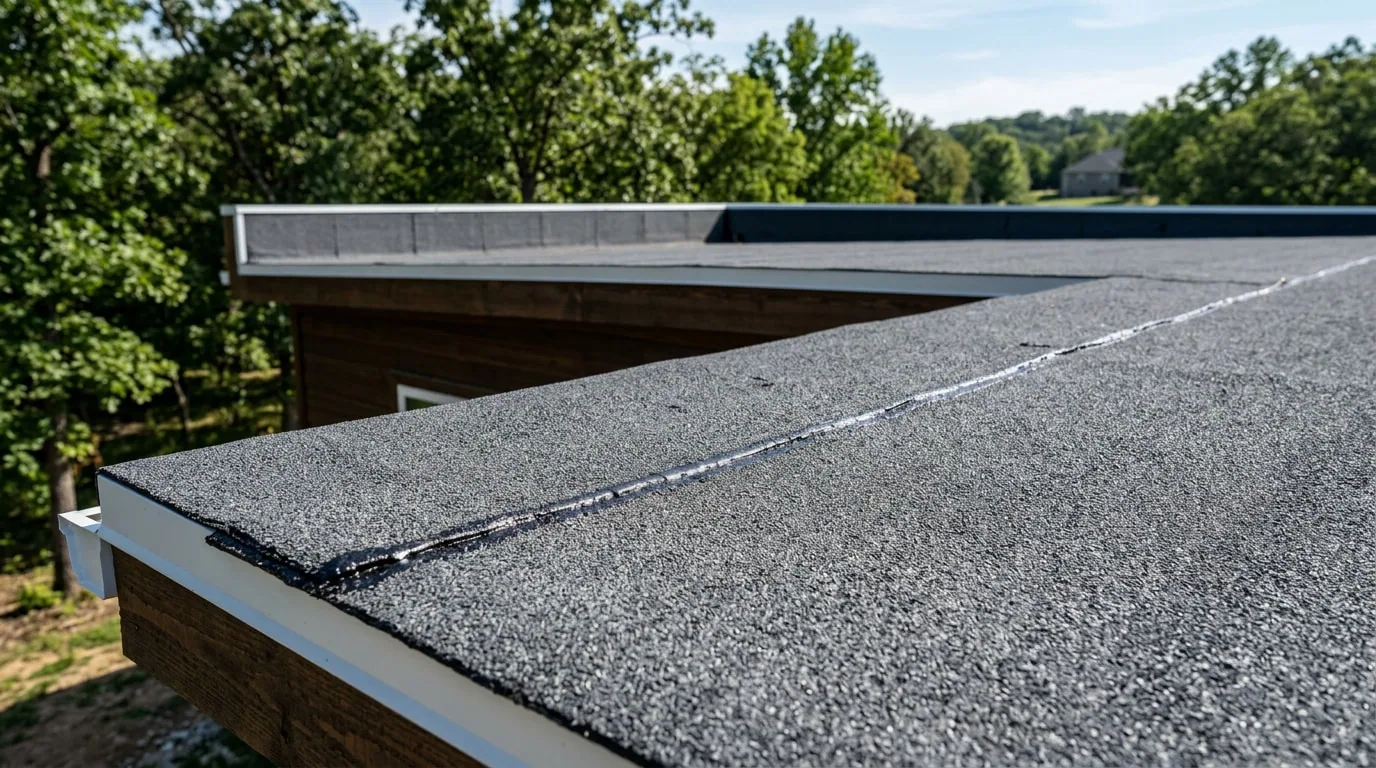 |
Multiple Plies, One Water Barrier
Built-up roofing, often called BUR, uses alternating bitumen and reinforcing felts to create multiple plies. A surface may include gravel, mineral cap sheet or another protective finish. That layered construction affects how a repair is made: a cut may reveal several courses, and each exposed edge needs to be rebuilt into the surrounding assembly. We inspect exposed laps, surface loss, ridges, blisters and repairs that have separated instead of applying a generic patch over the top.
The roof record may show how many layers were installed, but field edges, drains and prior openings can help confirm the actual build-up. If the assembly is heavy with surfacing or has several recover layers, a manager needs to know that before another roof is added. We inspect termination heights, door thresholds, curbs and scuppers for available clearance. A recover review can compare the existing build-up with a removal and replacement plan.
Blisters and soft areas can indicate trapped air, weak adhesion or moisture, but appearance alone does not identify the cause. We inspect the surface and may use readings to select test cuts. A moisture assessment can help organize those locations. The opening shows the material condition only at that sample point, so the report records both confirmed findings and areas that remain closed.
Water at Drains and Low Areas
BUR surfacing can collect granules and debris near drain bowls. We check strainers, bowls, sumps, scuppers and the surrounding membrane for an open lap or a low area that slows runoff. A dark stain below a scupper does not establish that the roof detail is the only source. We inspect the outlet, wall transition and path below it, then show the manager what condition is visible at each point.
At Sea-Tac, the normal monthly rainfall is nearly six inches in January and about six-tenths of an inch in July. This seasonal swing can test a BUR drain and its surrounding plies many times during winter. We confirm current roof moisture before opening the assembly and keep a dry-in sequence ready for the work area.
When a drain transition is the defect, the repair needs to connect the BUR layers to the bowl without leaving a loose edge. A drainage inspection can establish whether cleaning, flashing work or slope correction belongs in the scope. If the problem spans a low area, a roof repair plan can separate the outlet detail from broader assembly work.
Patching and Layer Rebuilds
For a small defect, we remove surfacing and failed material to reach a stable area, then rebuild the plies with a compatible bitumen and reinforcement. The patch needs enough overlap to join the existing assembly and must be protected with the specified surface. We photograph the cut and repaired layers, and note any condition below the membrane. That record gives the manager a clear repair location for future inspections.
Buried moisture or deteriorated deck may require opening beyond a surface defect. If the test cut shows wet insulation, we establish a boundary with additional checks and remove material only to the agreed limit. Work may include deck repair, insulation replacement and reconstruction of multiple plies. A replacement comparison can show when a broader area is more practical than repeating isolated repairs.
Some BUR work uses hot asphalt or other application methods that require fire prevention and site controls. We identify the selected product and process, then coordinate fire watch, air-intake protection, material staging and access. On an occupied building, the manager needs to know which roof section is active and how the crew will protect rooms below. The plan addresses those controls before materials reach the roof.
Roof Conditions Around Bellevue
Lake Hills includes commercial services at shopping centers, Bellevue College and surrounding residential communities. That mix can place small commercial buildings near occupied apartments and neighborhoods. For a Lake Hills property, we confirm how the roof hatch, loading area and pedestrian routes relate to the work zone. The building's actual use and access rules guide the sequence, while roof inspection establishes the assembly and condition.
Wilburton is an active redevelopment area where future plans include office, medical, retail, hotel and residential uses. A commercial roof project may need coordination with adjacent construction and planned site access. We confirm the current condition at the site and keep the approved staging area clear. The district's planned mix does not identify what is installed on a particular roof or what work that roof needs.
I-405 connects Bellevue's Downtown, Wilburton, Eastgate and Factoria employment areas. The corridor helps orient a property manager planning access for a regional service visit, but delivery and roof entry are set by the site's own layout. If the building lies near Wilburton, we confirm the gate, staging and any coordination with adjacent site work before setting the BUR repair sequence.
Replacement and Closeout
Replacement starts with removal limits and a review of the deck and insulation as the roof opens. We identify the new assembly, drainage path, perimeter details and transition heights in the project documents. Each section is protected and closed before work moves onward. Bellevue's adopted 2021 code editions took effect on March 15, 2024. Permit plans also follow state and municipal amendments, which we account for in the specified BUR scope. We coordinate the roofing scope with the project requirements and document any conditions found in the field.
Closeout includes photos of rebuilt plies, drains, flashings and edge conditions, plus a roof plan marking areas that were opened. We record the material system, repairs made, and any area not tested. A manager can use the record to compare later water reports with the repaired zone, identify new traffic damage and plan future work without guessing at the old layer sequence.
Maintenance can clear debris from drains, note surface loss and flag new blisters or open edges. A roof maintenance visit can keep those details on a recurring record. For another membrane approach, modified bitumen, EPDM and TPO have different construction and repair methods. We compare the available systems with the roof's condition and intended use.
For a Bellevue BUR evaluation, share the property address, roof history, leak dates and rooms, past repairs and hatch access. We will inspect the visible plies, drains and transitions, identify where testing is needed and describe a defined repair or replacement scope.
Commercial Roofing Questions
How can you tell how many BUR layers are on the roof?
Exposed edges, roof records and selective openings help confirm the build-up. We record what the opening shows and avoid assuming every area has the same layers.
Can built-up roofing be patched after a leak?
A patch can work when the surrounding plies are stable and the moisture boundary is understood. We remove loose layers, rebuild the affected area and document the detail that remains.
Does gravel surfacing need to be removed before repair?
The repair method and existing surface determine the preparation. We remove or move surfacing only where needed to reach a sound bond and follow the selected system's requirements.
When should an older BUR roof be replaced?
Widespread wet layers, repeated open plies, failing deck or insufficient height at transitions can point to broader work. We compare testing and repair history with replacement options.
How should BUR work be scheduled during Bellevue's rainy season?
Each open section needs a secure daily closure and a dry-in plan. We check current conditions and limit tear-off to the area that can be completed or protected within the available window.