Data center roofing in Bellevue prioritizes controlled access, leak response, equipment clearances and documented roof work. Plan a practical inspection.
A roof leak near a cable tray or cooling unit needs a precise location before anyone opens the assembly. A small water path can put ceilings, controls and sensitive equipment at risk, yet a visible stain does not show how far moisture has traveled. We begin with the facility contact’s report, confirm restricted areas and identify the roof section above. Then we inspect seams, drains, curbs and penetrations, recording what is visible and what would require testing. That gives the operations team a defined response rather than an assumption about the full roof. Bellevue sits within an Eastside employment corridor connected by SR 520 and I-405. Nearby Overlake has a large technology and office base, with Microsoft and Nintendo among the employers identified by Redmond. That context does not establish the design of any individual facility; the roof and security requirements have to be confirmed at the property. We plan around access rules and equipment uptime before proposing commercial roof repair or larger work. | 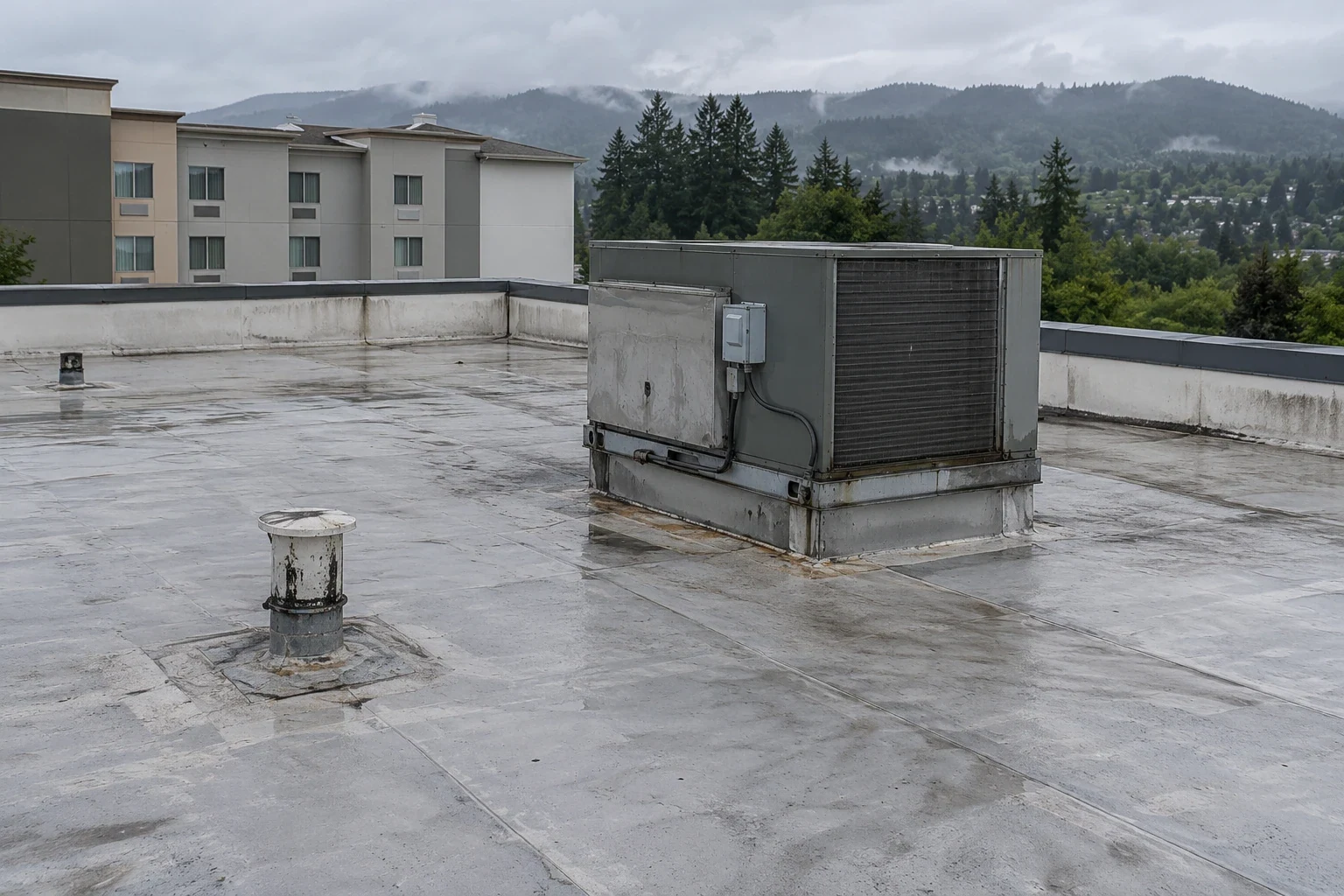 |
Locate the Leak Without Guessing
Water may appear below a roof penetration even when the entry point is several feet away. We ask when the symptom began, whether it follows rain or equipment activity, and which room or rack zone is affected. On the roof, we trace the likely route through membrane laps, equipment bases, drains and edge details. If the building team has a roof plan, service record or marked interior location, we use it to orient the inspection and document the area by grid or landmark.
A wet ceiling tile is a signal, not a moisture map. We check the surface and adjacent details for a specific defect, then mark any uncertainty. Where insulation condition or deck status changes the repair decision, we explain the value and location of a test opening before disturbing the roof. The manager can decide how to coordinate that test with site procedures. If the problem is part of wider aging or repeated failures, a replacement review compares verified roof conditions and required continuity of operations.
Protect Critical Roof Details
Data center roofs can have cooling equipment, electrical runs, exhausts, access platforms and redundant services crossing the membrane. We inspect the flashing around each affected curb and pipe, look for loose seams or abandoned openings and note whether maintenance traffic has worn a path. We also check the drainage field because retained water can keep a weak detail under stress. Any finding is tied to a location and supported by a photo where access allows.
A recover should only be considered after existing layers, attachment and moisture conditions are understood. Added height can change the clearance at equipment curbs, doors, drains and perimeter metal. If a test opening is needed, we identify the boundary and how the opening will be restored. A production facility may present a different equipment mix, as in manufacturing plant roofing; a conventional office has a different occupancy pattern, as addressed by office building roof planning. Each recommendation follows the facility’s assembly and operations.
Check Drainage Around Mechanical Areas
Cooling equipment often sits near drains, curbs and service paths, so we inspect those details together when they fall within the reported zone. We look for debris at strainers, membrane pulling away from a drain bowl, compressed insulation, loose counterflashing and low areas that hold water. A drain that appears open at the surface may still need a closer look at the bowl or connection. Before a new roof layer is proposed, the finished elevation must work with the drain and overflow details.
Access to rooftop equipment belongs to the facility’s authorized staff. We agree on escort rules, equipment clearances, fall protection, roof routes and whether a technician must attend. We do not operate or interrupt critical systems. If a repair requires moving a line, isolating equipment or changing a support, that coordination is identified before work proceeds. Where drainage needs separate correction, our roof drain service can be included with the membrane scope after the facility approves the work boundary.
Set a Controlled Work Window
Before scheduling, we confirm who can authorize entry, how crews are escorted, which rooms are restricted, and where tools and materials can be staged. We ask about visitor screening, badge procedures, photography limits, roof hatch access, tie-off points and emergency contacts. These rules can vary even among buildings operated by the same organization. The scope names the agreed route and work area so the crew arrives prepared and the site contact knows what to expect.
Overlake is an Eastside urban center with offices, retail, hotels and two light-rail stations, while SR 520 links it with Bellevue and the broader technology corridor. That regional access helps explain why facilities may sit near one another, but it does not determine a site’s security process. We verify each property’s own instructions and consider delivery timing and neighboring activity. An Overlake roof visit still begins with the facility’s specific entry and access rules.
Document Findings for Facilities Teams
At closeout, the facility receives a short record of the roof area inspected, the defect or concern found, the repair limits and any conditions that were not verified. Photos should locate the seam, drain, curb or penetration without exposing restricted material. If a test opening found moisture, the record states where it was taken and how it was closed. This gives site staff a clear basis for follow-up inspections and future contractor access.
When several facilities or roof zones need comparison, a roof condition report can sort urgent leaks from planned capital work. If replacement is indicated, we compare compatible assemblies, including TPO roofing, only after deck, attachment, insulation, drainage and equipment clearances are known. Send the Bellevue address, leak location, access contact, roof plans and service history. We will confirm the visible conditions and explain the next decision point.
Commercial Roofing Questions
Can a roofing crew work on an active data center?
The facility sets the access and security requirements, and the work plan follows them. We confirm escorts, restricted areas, staging, photography rules and an approved work window before mobilizing. Any step that affects equipment access or operations is identified for coordination in advance.
How quickly can you investigate a reported roof leak?
Visit timing follows access approval, the leak location and the facility’s operating rules. Share the affected zone, active water conditions and the available roof route so we can arrange the right visit. The first inspection focuses on locating visible defects and protecting the building.
Do you need to access the computer floor to find a leak?
Not always. The facility can provide a marked location or have its representative identify the affected area from an approved position. We coordinate any interior access before the visit and use roof observations to narrow the path. Testing is discussed when the assembly cannot be confirmed from the surface.
Can a single roof leak threaten equipment?
Any water near critical rooms deserves prompt attention. Risk varies with the location and path. We document the reported area, inspect nearby roof details and explain what is confirmed. The facility should follow its own response procedures while the roof source is evaluated.
What do you need before entering the site?
Provide the property address, authorized contact, access and escort process, affected roof zone, security restrictions and roof plans if available. Tell us whether photography or equipment-area access is limited. We will confirm the agreed route and work scope before arrival.