Distribution center roofing in Bellevue needs clear leak tracing, safe dock access and phased roof work. We document repair, recovery and replacement options.
A dock door can keep cycling while a leak drips above a staging lane. Before anyone moves pallets or closes a bay, the roof team needs the address, affected area and a safe route to the roof. In Bellevue, steady cool-season rain can expose a seam or drain problem across a wide low-slope roof. We map the ceiling mark to the nearest roof details, check adjacent areas and record which parts of the assembly are visible. That first visit should leave the facility contact with a clear repair limit and a practical next step. Distribution properties rely on predictable movement. BelRed has former warehouse sites among its offices, creative businesses and institutional uses, while the Sea-Tac cargo district serves regional shipping and logistics activity. Those settings make access, staging and work windows part of the roof scope. We ask which doors, lanes, shifts and equipment must stay available, then compare commercial roof repair with broader work only after seeing the conditions. | 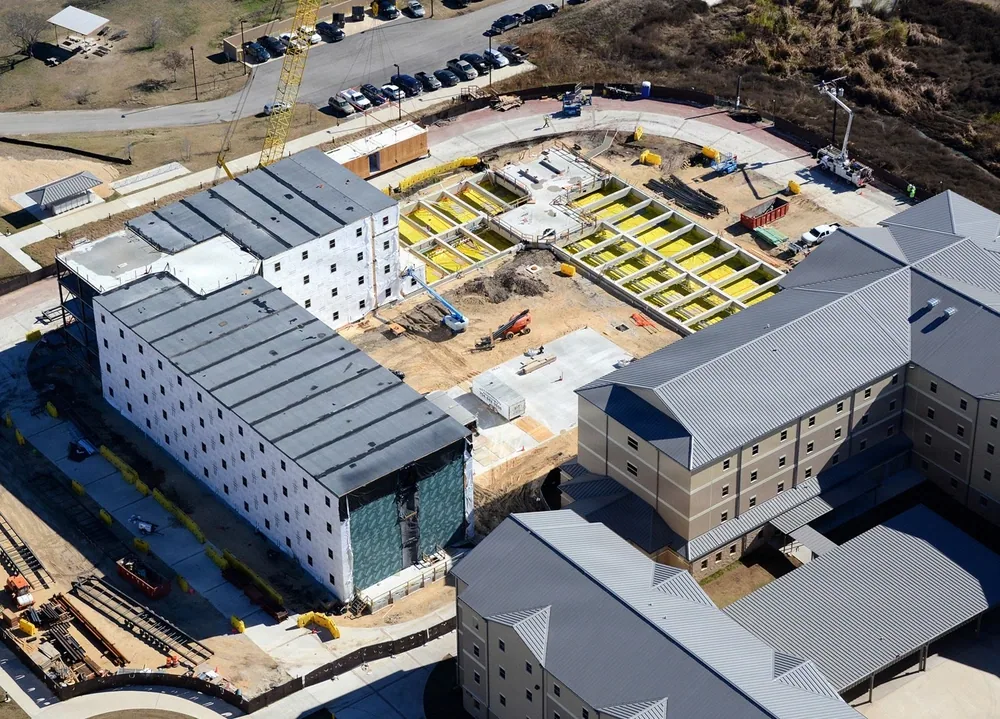 |
Trace the Leak Back to the Roof
A wet spot over a conveyor does not identify the entry point by itself. Water can travel along a deck, insulation facer or structural member before it reaches the interior. We begin with the bay, rack or equipment location reported by staff, then use roof plans and visible framing to narrow the search. At the roof surface, we check nearby laps, seams, drain bowls, curb corners, penetrations and edge transitions. Photos tie each observation to a location so a later repair can be compared with the first visit.
When the leak appears only during wind-driven rain, we look at perimeter details and transitions exposed to that direction. A stain that grows after a storm may indicate retained moisture, but it does not establish how far insulation damage extends. If surface review cannot distinguish a membrane defect from a wet layer below, we explain where a test opening could settle the question. Our replacement evaluation starts with those same roof facts and does not assume that one interior mark calls for a full tear-off.
Keep a Repair Zone Specific
Distribution roofs can be large enough that a small defect needs a deliberate boundary. We mark the failed seam, puncture or flashing detail, inspect adjacent material and check whether nearby insulation feels soft or shows signs of moisture. A repair can remain localized when the surrounding membrane is secure and the assembly is dry. If several laps have released or moisture is spreading, we outline the larger area and identify what still needs verification. The facility receives photos and a plain description of the limits, not a vague promise to fix the roof.
A recover may suit a stable assembly with dry insulation, sound attachment and enough clearance at drains and edges. Added height can change how water reaches a drain or how flashing meets a curb, so we check those points before recommending another layer. For a separate warehouse use case, see warehouse roof repair planning; a production floor may have different equipment concerns, as described in manufacturing plant roofing. The assembly, not the property label, determines the right scope.
Check Drainage and Roof Penetrations
Water that remains around a drain can complicate leak tracing and shorten the useful life of a patch. We look for debris at strainers, low spots around bowls, seams pulling toward a drain and signs that insulation has compressed. If a replacement changes roof height, the drain connection and overflow detail need to work with the finished surface. The same inspection checks pipe boots, electrical conduit, exhaust curbs and equipment supports, where later trades may have disturbed flashing.
Large logistics roofs also have travel paths for technicians and maintenance staff. A curb near a service route can receive repeated foot traffic, while a new line or unit may leave an opening that was never fully integrated with the membrane. We record these details separately from the reported leak so the contact can address immediate water entry and planned upkeep in order. If a drain or flashing issue needs a distinct scope, our roof drain and scupper work can be coordinated with the repair.
Protect Dock Flow During the Work
Before mobilization, we confirm the roof hatch or ladder, delivery point, tie-off requirements, tenant rules and any restricted areas. The operations contact identifies shift changes, active docks, truck circulation, equipment that cannot be shut down and interior zones that need protection. We can then divide larger work into sections with a defined start, dry-in plan and end-of-shift stopping point. If weather changes, the crew needs a safe boundary that can be secured before work pauses.
Sea-Tac’s cargo area includes Port-owned and third-party cargo facilities, with more than 200 acres identified for airport-related logistics development. We do not assume one facility follows another’s rules. We agree on the specific staging area, loading lanes to keep clear and time when crews can cross active routes. BelRed includes offices and institutional uses alongside former warehouse properties; each property contact confirms parking and daytime access. A local BelRed roof visit begins with the building’s own access plan.
Give Operations a Useful Record
After repair, the facility contact should be able to find the treated area without relying on memory. We provide roof photos, the approximate location, the work performed and any adjacent condition that remains unverified. If a test opening finds wet insulation, the closeout record identifies where it was opened and whether the opening was repaired. This gives the next manager or roof contractor a starting point for follow-up instead of a repeated search above the same bay.
For a portfolio or multi-building operation, consistent records help compare recurring defects and budget future sections. A roof condition report can separate immediate leaks from aging areas that need planned capital attention. If the existing system points toward replacement, we can compare compatible assemblies, including TPO roofing, after deck, insulation, drainage and use are understood. Send the Bellevue address, affected dock or bay, prior repair notes and access window. We will identify what can be confirmed and explain the next step.
Commercial Roofing Questions
Can roof repairs happen while a distribution center stays open?
Often, if the contact identifies a safe roof route, staging location and loading lanes that must remain clear. We plan a contained work area and confirm how it will be secured at the end of each shift. Larger removal may need phased sections or a narrower work window.
How do you locate a leak above a shipping lane?
We start with the marked interior location and compare it with roof drains, seams, curbs and penetrations above. Water can travel before it reaches the ceiling, so we document uncertainty instead of treating the stain as the entry point. A test opening can help when the insulation condition changes the repair scope.
Does one roof leak mean the distribution building needs replacement?
No. A localized defect may be repaired if the surrounding membrane and insulation remain serviceable. We check adjacent seams and moisture indicators, then explain whether the repair can stay narrow or whether additional testing is needed. Replacement is considered when broader system conditions support it.
What should our team prepare before an inspection?
Share the Bellevue address, leak location, roof access rules, dock schedule and any available roof plan or repair records. Tell us which routes and interior areas must remain available. Those details let us inspect efficiently and avoid disrupting active operations.
When is a roof recover appropriate?
The existing layers need to be dry and stable, attachment must be suitable, and added height has to work at drains, curbs and edges. We review records and use test openings where conditions are unclear. If moisture or deck concerns are widespread, removal may provide a better defined scope.