

Emergency commercial roof repair in Bellevue, WA limits active water entry with safe response, temporary protection, clear records and a permanent repair plan.
A drain bowl that cannot clear during steady rain can send water toward a roof curb or interior ceiling. When a leak is active, the immediate work is to protect the building and find a safe route to the likely opening. We answer emergency calls around the clock, including weekends and holidays. Tell us the Bellevue address, where water is entering, who can provide access and whether equipment or occupied rooms are exposed. An emergency visit separates temporary protection from permanent repair. A dry-in may reduce water entry until surfaces can be prepared, but it does not prove the insulation is dry or finish the repair. The crew photographs the affected zone, records the temporary boundary and identifies follow-up work. This gives the property manager a usable handoff rather than an informal report that the roof is “handled.” | 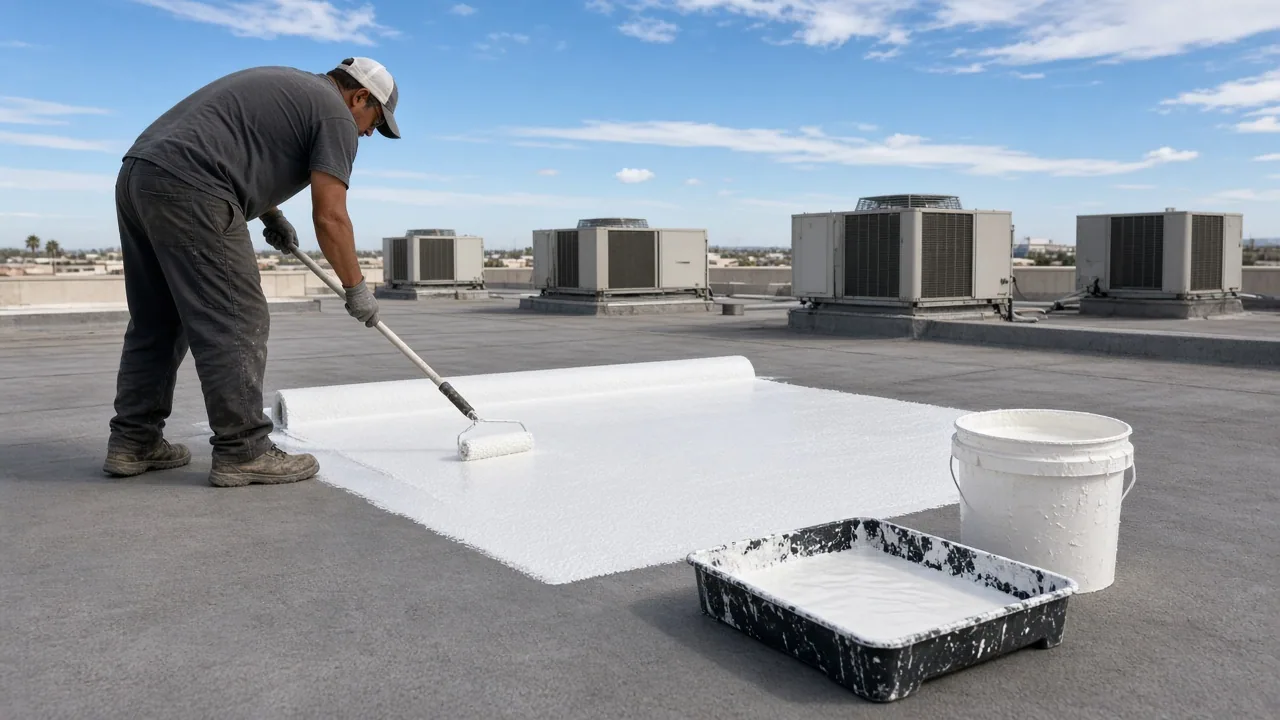 |
Send the Right Site Details
Give dispatch a callback number, the affected floors or rooms, whether water is still active, any electrical or sensitive equipment nearby and the roof access route. A safe interior photo can help orient the crew. Do not ask staff to walk a wet roof or approach an exposed edge. The building contact can move portable items, isolate the room and protect equipment from below while the roof response is arranged.
Weather and lighting affect what can be done. Wind, lightning, darkness, slick membrane or standing water can make roof access unsafe. We explain which immediate measures are possible and which detail must wait for safer conditions. Bellevue’s normal rainfall is concentrated in the cool months, but a specific response depends on rain intensity and roof surface at the time. The current condition at the property determines the safe sequence.
Limit Ongoing Water Entry
Once the crew can reach the roof safely, it checks the area above the reported room and nearby seams, curbs, penetrations and drainage. Water may travel beneath a membrane before appearing inside. We look for an opening, displaced flashing, failed lap, puncture or blocked drain path, then note whether the apparent source is confirmed. If the assembly is hidden or conditions prevent a close inspection, we mark the uncertainty and avoid opening more roof than the immediate work requires.
Temporary protection may be a compatible patch, secured cover or dry-in over a localized opening. Its suitability depends on surface moisture, membrane condition, wind, roof slope and how soon permanent materials can be installed. A loose cover can become a hazard, and a seal placed on a wet surface may not hold. The crew records the material, secured edges, work boundary and conditions that would require another visit.
Interior protection is coordinated with the building contact. We identify where water is collecting and whether ceiling access is needed to keep equipment or finishes safe. A roof response does not replace electrical review, extraction or interior restoration by the appropriate trade. For an occupied office or restaurant, the site team needs to know which room is restricted and when it can be reassessed after roof work.
Capture What Is Confirmed
Emergency documentation distinguishes what the crew saw from what remains a possibility. Photos can show an open lap, damaged flashing, displaced edge metal, puncture or drain condition. We identify the roof system where visible, note prior patches and list areas that weather or access prevented us from checking. This matters when the property manager requests a permanent scope or needs to explain why another inspection is scheduled.
Sea-Tac normals show mild average winter temperatures and measurable but modest snowfall. Occasional freezing can affect a repair bond, while prolonged cool-season moisture can keep surfaces damp. If the needed material cannot be installed under current conditions, the crew may protect the opening first and return for permanent correction when preparation is reliable. Summer is comparatively dry, but heat and surface conditions still affect safe access and work timing.
When a large section is difficult to reach, a drone image survey may help plan a return visit. It can map visible roof areas but cannot confirm the condition of a seam or insulation. A targeted infrared scan may help choose test locations if hidden moisture is a concern. The final boundary still depends on hands-on verification.
Schedule the Durable Work
A permanent repair follows the failed component. A membrane puncture needs compatible material and prepared edges; a separated lap needs the proper weld or bonded detail; a leaking curb may require rebuilt flashing. If test openings show wet insulation, we identify its extent and show removal separately. A drain, scupper or overflow correction may also be needed if water is held around the repaired zone.
Material, access, preparation, wet insulation, lift needs, equipment coordination and a suitable weather window drive the next estimate. We state which items are confirmed and which are subject to an approval after opening. Bellevue adopted the 2021 International Codes in March 2024, with Washington State and local amendments also applying to project review. Requirements depend on the repair proposed and how far the scope expands.
If multiple roof zones are failing, the owner can compare a limited repair with a phased larger scope. We keep the immediate opening distinct from broader work. A planned repair can use the emergency photos and Diligence Notes. If widespread wet material or repeated failures change the decision, a separate replacement estimate can show the larger boundary and sequence.
Hand Off the Next Step
Before leaving, the crew records protection installed, photographs the detail, notes any inaccessible area and identifies what must happen next. The site contact receives a clear statement of what the temporary work covers and what remains exposed. If another storm arrives before permanent repair, that note helps the building team decide when to request a follow-up.
BelRed has offices, institutional facilities and transit-oriented redevelopment, while Eastgate has office and commercial properties near I-90 and Bellevue College. An emergency visit at either place still needs the exact address, contact, work window and roof route. We coordinate staging and any tenant notice with the person responsible for the building. A condition record can carry confirmed findings into later maintenance decisions.
Keep roof plans, prior leak reports and photos available if possible. They help identify an assembly and compare the affected section with earlier repairs. We will inspect the water path, record immediate protection and propose a permanent correction with a visible boundary. For BelRed or Eastgate sites, share any loading, access or operating constraints when calling.
Commercial Roofing Questions
Can you respond after business hours in Bellevue?
Our emergency line is answered at all hours, every day of the week, including holidays. Share the address, active conditions and site contact so we can assess the route and safe work options. Weather, access and roof surface determine what can be completed on the first visit.
Can a crew tarp a roof in heavy rain?
The crew first decides whether roof access and secure placement are safe. Wind, lightning, slick surfaces and darkness can limit the work. If a cover cannot be secured reliably, we explain the interior protection steps and return when conditions allow a stable temporary measure or permanent repair.
Does temporary protection mean the roof is fixed?
No. It covers the recorded area for a limited purpose and may need removal before a permanent repair. We document material, boundaries and weather limitations, then state whether flashing, membrane, insulation or drainage work remains. The building team should keep the handoff until the durable scope is complete.
What information makes an emergency call useful?
A street address, callback contact, active leak location, room impact, roof access instructions and any exposed equipment help set the response. Mention loading reservations or areas that cannot close. Interior photos taken from a safe location can help identify the affected zone without sending staff onto the roof.
Will you inspect the whole roof during an emergency call?
The immediate visit focuses on safe access to the reported condition and nearby details needed to control water. A full roof assessment may require a separate visit if weather, darkness or building rules limit coverage. We record those limits and schedule broader inspection when it affects the repair decision.