Commercial roofing inspections, leak repair and replacement planning for Crossroads businesses, mixed-use buildings and property teams.
Crossroads is an east Bellevue center for shopping, entertainment, cultural activity and services. Its commercial mix sits beside large apartment complexes and established single-family neighborhoods, and the city identifies the area as a countywide growth center for jobs, shopping, housing and recreation. A roof project should account for the actual building and its users. We inspect accessible sections, document visible defects and coordinate a scope with the property contact. Bellevue’s nearby lowland climate reference has about 39 inches of normal annual precipitation, with a wetter cool season and a dry July. Drainage and roof transitions are worth inspecting in that climate, but the source of a leak depends on the building evidence. We begin with the address, roof history and access rules before recommending commercial roof repair. | 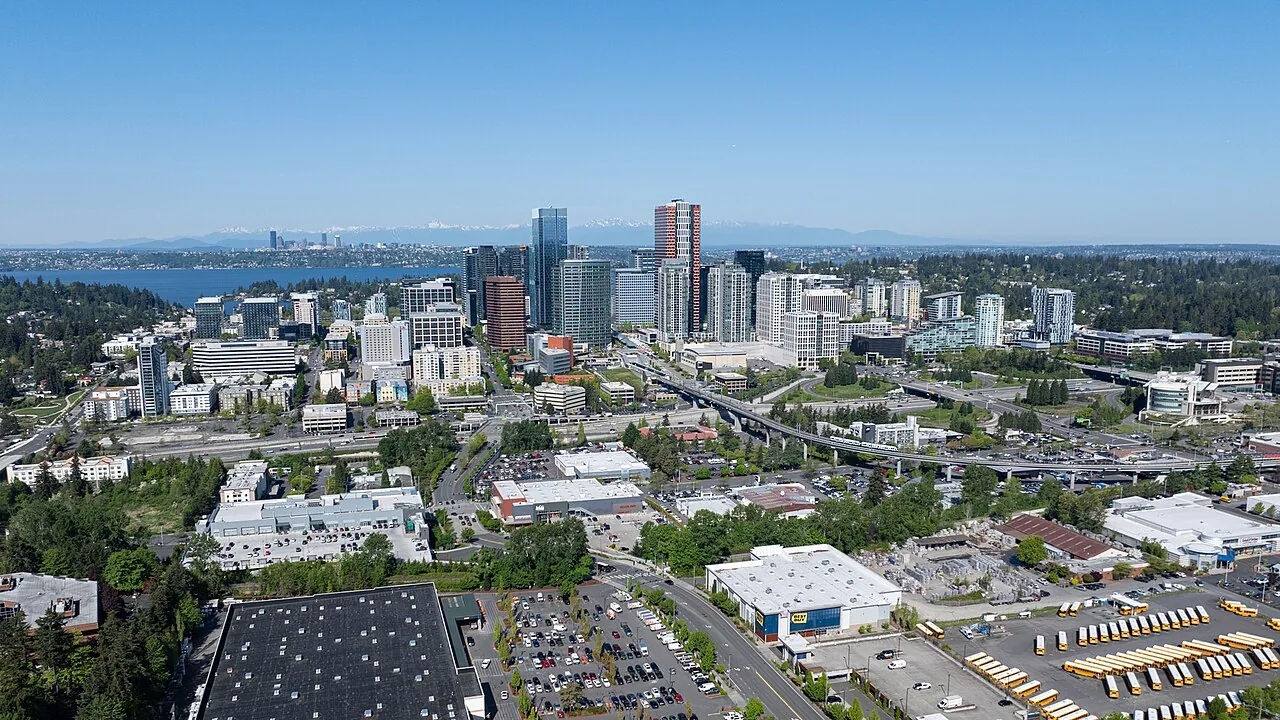 |
Inspect the Roof That Serves the Property
We confirm whether the reported issue is over a retail, entertainment, cultural, service or other commercial area. The owner identifies the room, tenant space, leak timing and any prior repair. On the roof, we trace the report to accessible seams, drains, equipment curbs, penetrations, edges and wall transitions. A ceiling mark can be offset from the opening, so we document what is visible and identify testing if concealed moisture would change the repair boundary.
Crossroads includes commercial uses alongside apartments and established houses. That combination makes the ground-level work zone and occupant routes part of the plan. The property representative confirms customer entrances, tenant access, deliveries, parking, material staging and any quiet or restricted hours. We do not assume that one schedule applies to the entire center or to every building. A separate roof section or tenant area receives its own access confirmation when needed.
Check Water Management and Roof Details
The first walk looks at drain inlets, overflow routes, low areas, membrane seams, flashing, parapets and equipment supports. If the roof has standing water, we record the location and note when it was observed. A clear drain strainer does not prove that water is moving across the full roof. If an outlet or piping needs a separate contractor, we identify the roof-side connection and who should coordinate that work.
Cool-season rain in Bellevue is more persistent than midsummer rainfall, while overnight temperatures can approach freezing. We look for drainage and edge conditions where relevant, but do not infer a defect from climate alone. A ponding water assessment can document standing water and roof-side details. If a test opening is approved, the location, purpose and restoration method are recorded before removal begins.
Choose a Repair Boundary That Fits the Evidence
A localized split seam, failed flashing detail or puncture may support repair if the adjacent material can accept a compatible tie-in. We inspect around the reported defect and note whether previous patches, wet material or surface wear affect the work. The proposed scope should identify the roof zone, accessible area, work method and any condition that could change after the assembly is opened.
If several roof areas show deterioration, a broader assessment may be appropriate. A replacement assessment can review existing layers, deck exposure, insulation, drainage and phasing. TPO roofing or another compatible system can be considered against the building’s use and project requirements. A useful proposal comparison keeps roof limits, testing assumptions and site logistics consistent across each option.
Keep Customer and Resident Routes in View
Before mobilization, the contact identifies service entrances, customer paths, apartment access, delivery zones and spaces that need to stay open. We coordinate roof entry, parking and staging and confirm who receives a daily update. If work is above an occupied area, the owner decides what notice or interior protection is required. Larger repairs can be split into sections, with a stated condition for securing each area before a crew leaves.
The city’s growth-center designation includes jobs, shopping, housing and recreation. That informs the mix of uses but does not determine how a particular property operates. We confirm the actual tenant schedule and work restrictions with the facility contact. If another trade must handle a sign, HVAC unit, drain line or electrical system, the owner identifies the authorized technician and timing before the roofer reaches that point. The daily note can list the work zone, status of temporary protection and any route change for the next shift. This gives property staff a concise update they can share with affected tenants and service teams.
Coordinate Multi-Property Service Carefully
A portfolio owner may want to schedule several Bellevue inspections in one cycle. Each location still receives its own roof walk, access confirmation and report. A multi-site roof program can organize visits, while the property record identifies findings by address and section. That separation matters when one building has a leak and another is due only for routine review.
If an owner also has property in Downtown Bellevue or BelRed, those visits can be scheduled separately with the local contact. We retain the building-specific plan, tenant rules and roof history for Crossroads. The district name helps identify the service area; it does not substitute for site confirmation.
Document the Roof Work for Facility Staff
Closeout notes identify the building, roof section, observed defect, completed repair, photos and any remaining uncertainty. If an approved test finds wet insulation or deck damage, the record states where it occurred and how the area was restored. If access prevented inspection, that limit is called out. The property team can retain the report with its maintenance history and use the same roof reference for follow-up.
Crossroads’ mix of shopping, entertainment, culture, services, housing and recreation supports varied operating needs. The owner’s own access plan and roof records guide the work. A roof condition report can document other sections, while a repair scope can address a specific finding. Send the property address, leak notes, prior maintenance, available plans and contact information. We will document the conditions visible and the next step supported by the inspection.
Commercial Roofing Questions
Do you provide commercial roof inspections in Crossroads?
Yes. We inspect the property’s accessible roof sections, review the reported concern and document visible conditions and access limits.
Can roof repairs be scheduled around business hours?
The property contact sets work windows, customer paths, delivery access and notice requirements. We coordinate the roofing sequence within those approved rules.
Will you inspect a roof above retail and residential space?
We can inspect areas authorized by the owner and coordinate the access plan. Each roof section and occupied area is documented separately where needed.
How do you determine whether repair or replacement is needed?
We inspect the reported area and surrounding assembly, then document the evidence and any tests required. A broader recommendation should be tied to observed conditions.
What should we provide before a Crossroads roof visit?
Send the property address, affected room or tenant area, dates water appeared, prior repair notes, roof plans and the authorized access contact.