

Correct commercial roof drainage in Bellevue by checking drain bowls, scuppers, crickets and ponding. Get a repair scope tied to the roof layout.
A dark ring around a drain bowl can mark more than dirt. Debris, a low spot or loose flashing may hold water against the roof. We trace the rain path to the outlet, then check the drain, nearby seams and interior ceiling. Bellevue's cool months bring far more rain than July, so a drainage defect can see repeated wetting. The first visit should show whether the problem is a blocked outlet, a slope issue or a damaged detail. | 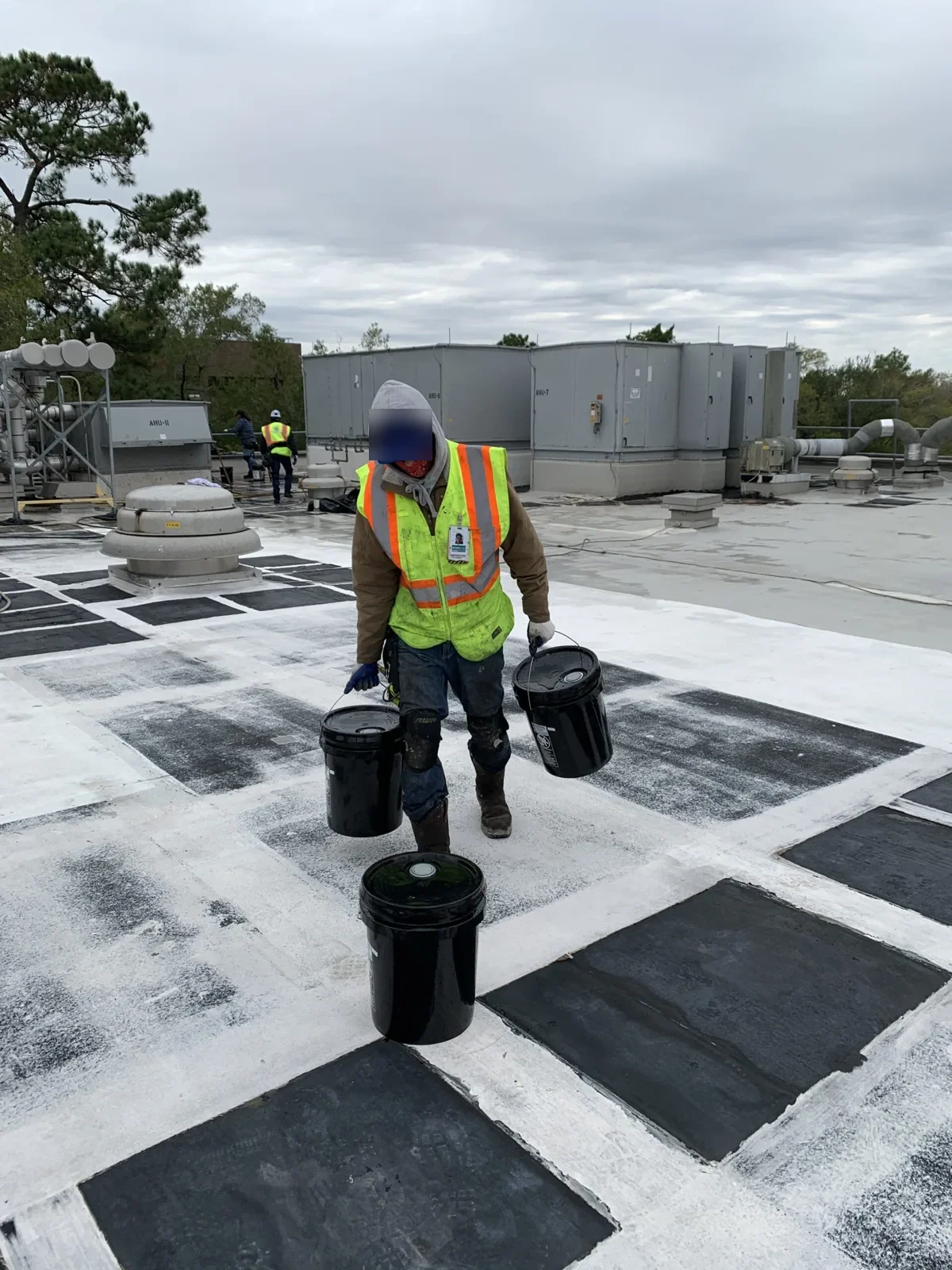 |
Where Water Sits
Standing water needs a location and a reason. We note its depth, outline and distance from drains, curbs and parapet corners. A shallow area that dries may call for monitoring; water that remains can point to a blocked outlet or a depression in the assembly. We inspect for algae, dirt lines, open laps and softened areas to distinguish drainage trouble from a leak whose source is elsewhere.
Sea-Tac normals offer a nearby lowland reference: January precipitation averages 5.78 inches, compared with 0.60 inch in July. That wet-season pattern makes clear drain bowls and intact flashing worth checking ahead of repeated rain. We record actual conditions and identify which outlet serves the affected area. The manager gets photos and a marked repair boundary, not a general note that the roof ponds.
On a TPO roof, debris can collect where seams and equipment interrupt flow. Built-up or modified-bitumen surfaces can hold grit and conceal a drain edge. We use the installed assembly to guide compatible repairs. If water appears indoors, a leak investigation can connect the ceiling location with the roof above.
Drain Bowls and Scuppers
A drain can fail at the strainer, bowl, clamping ring, sump or flashing. We check that debris has not narrowed the opening and look for a loose edge, split or wrinkle that may keep water from reaching the bowl. For an interior drain, access below may confirm whether the outlet is active and whether the reported leak aligns with the roof condition.
Scuppers need a clear throat and sound perimeter flashing. Stains below an exterior outlet show water reached the wall, but do not prove the scupper is the only source. We inspect its corners and discharge path. A blocked leader can back water up at the opening. The scope separates cleaning, membrane repair, metal work and downstream corrections so the manager can see which work belongs to the roof.
Crickets and saddles direct water around equipment or toward a drain. If one has flattened or shifted, water may collect behind the curb. We map the slope and check adjacent flashing before deciding whether to rebuild a small area or revise a wider section. An EPDM roof system needs repairs compatible with its surface and seams, not generic sealant across the drain field.
Correcting the Flow
Cleaning an outlet is maintenance; changing the path of water is a roof correction. We identify whether the drain sits too high, a sump is needed, or a cricket can guide runoff without creating a new low point. A localized repair may rebuild drain flashing or adjust a short tapered section. Broader slope work can require removing layers, reviewing the deck and confirming how the new area meets curbs and edges.
Infrared readings can help select test-cut locations, while an opening confirms whether insulation is wet. If the assembly is damp, covering it can preserve the problem. A moisture survey can focus testing, and a tapered insulation scope may fit when slope and wet materials need correction together. We record each opening and the condition found.
The proposal states how water should travel after the work, which outlets will serve the area and what conditions remain. It identifies access, staging, protection and interior coordination. For a broader assembly issue, a replacement review can compare full work with localized repairs. That comparison uses observed conditions, not an assumption that every pond calls for a new roof.
Access and Work Windows
Drain work may sit above occupied rooms, loading areas or shared entrances. We coordinate the service hatch, material path and any area that needs to stay clear. A high-rise or mixed-use property in Downtown Bellevue may need a defined delivery period and staff notice. In Crossroads, retail activity can make the area below an outlet important to protect. The work plan follows the actual site.
Rain affects preparation, flashing and adhesives. July and August are comparatively dry in local normals, while the wet season can narrow work windows. We check conditions near the scheduled date and keep a protection plan if weather shifts. The manager receives the sequence, active roof areas and the point when each outlet returns to service.
Nearby winter averages are near the low 40s, with overnight lows in the upper 30s. We inspect wet details rather than assume a single cause. Sea-Tac snowfall is measurable but modest, so we review the building's design records when snow loading is a concern. Drainage and structural capacity are separate questions, each needing the right evidence.
A Record of the Drainage Path
Closeout photos show the drain bowl, repaired flashing, cricket and nearby membrane in context. The report identifies debris removed, parts replaced, areas opened for testing and conditions that remain for follow-up. A marked roof plan lets the facilities team match a later interior report with the outlet or low point that was addressed. If a different tenant reports water after the next storm, the record helps distinguish a returning issue from a new leak path.
Routine roof maintenance can keep strainers clear and catch loose flashing before repeated rain reaches the assembly. A maintenance program can note outlets, scuppers and low areas on each visit. If a manager needs the broader condition of the roof recorded, a photo condition report can connect drainage findings with seams, penetrations and repair priorities. Work after drain service should keep water moving and preserve access for the next inspection.
For a Bellevue drainage assessment, send the property address, affected rooms or roof zones, recent leak dates, roof history and service-hatch access window. We will trace the flow, inspect the outlets and identify whether cleaning, flashing repair, slope correction or additional testing fits the roof.
Commercial Roofing Questions
How can we tell a blocked drain from a low roof area?
The water outline and the outlet condition help separate them. We check the strainer and bowl, then compare the wet area with the roof's slopes, seams and curb locations. If needed, a level survey or test opening can establish what the surface alone cannot show.
Does ponding automatically mean the roof needs replacement?
No. A clear outlet or localized cricket repair may correct a limited condition. We look for wet insulation, deteriorated membrane, recurring water and the reach of the low area before comparing a repair with larger work.
Can a roof coating remove a puddle near the drain?
A coating follows the existing roof shape and cannot create a proper drain path by itself. The low area and outlet need evaluation first; any slope correction and coating work should have separate, compatible scopes.
What should we record when water appears inside?
Note the room, ceiling location, time, active weather and whether the area changes after rain stops. Those details help us compare the interior report with the roof zone, outlets and possible paths through the assembly.