

Compare TPO roofing for Bellevue commercial buildings. We inspect seams, attachment, drains and insulation before recommending repair, replacement or recovery.
A seam that has lifted beside a rooftop unit can admit water long before a stain appears indoors. In Bellevue, we inspect the TPO field, welded laps, curbs, drains and edge terminations together, then trace the rain path to the first failed detail. The nearby lowland climate is wet through much of the cool season and markedly drier in July. That pattern makes sound seams and a clear drainage route important, but it does not tell us whether an individual roof needs repair or replacement. | 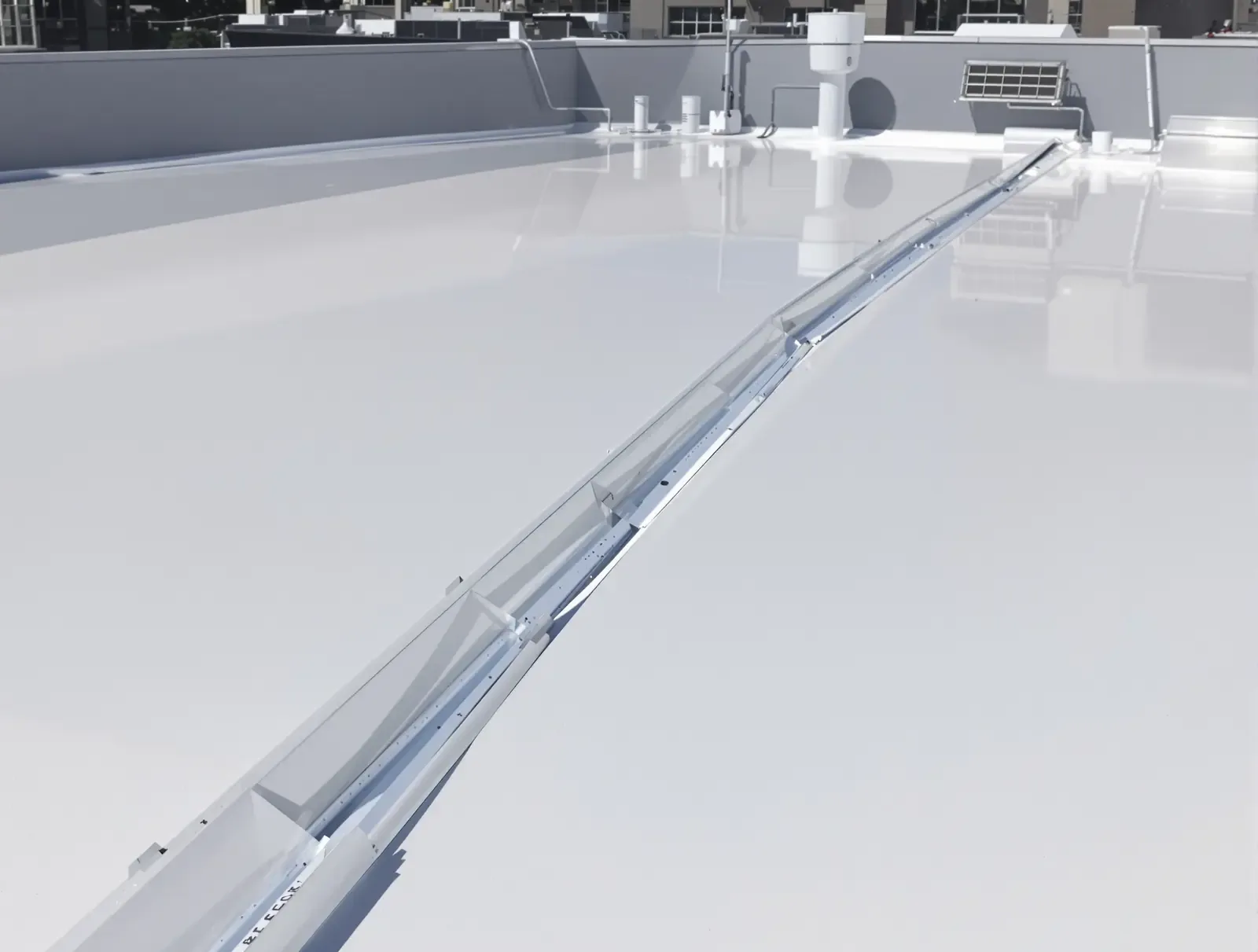 |
How a TPO Roof Is Joined
Thermoplastic polyolefin roofing is a single-ply membrane with seams that are commonly joined by heat welding. A sound weld depends on clean material, suitable conditions, correct settings and consistent technique. We inspect the lap surface, probe suspect seams and look for fishmouths, wrinkles, contamination, cuts or patches that have separated. A membrane can appear intact across the field while a narrow opening at a corner sends water beneath it.
Attachment varies by assembly. Fastened systems transfer loads through plates and fasteners; adhered systems rely on compatible bonding across the prepared substrate. We review the roof records and check visible perimeter details, then identify what can be confirmed from the surface. An inspection report can map the assembly and flag areas where a test cut is needed. It does not infer the deck or insulation condition from the membrane color.
Transitions deserve the same attention as field seams. At a curb, pipe, parapet or drain, membrane has to connect to metal and surrounding materials without leaving an exposed edge. A curb detail review can address equipment penetrations, while a drainage check identifies low points and outlet conditions. We tie each finding to its roof zone so the manager can see which repairs belong together.
Repair or Replace the Membrane
A puncture or short open seam on a dry, well-attached roof can often be repaired with compatible TPO material. We remove loose or contaminated edges, prepare the surface, weld a patch with rounded corners and test the finished seam. Sealant over a weak weld does not restore the membrane connection. The proposal identifies the repair area and any nearby condition that could shorten its life, such as repeated traffic, a sharp edge or movement around equipment.
If seam failures repeat across several roof zones, insulation is wet or attachment has loosened broadly, a small patch may leave the main problem in place. We map the defects and compare localized work with a larger replacement. Where existing layers may remain, a recover assessment checks moisture, attachment, height at drains and compatibility before an overlay is considered. If the evidence points to a new assembly, the plan includes tear-off, deck review, insulation, perimeter securement and transitions.
Infrared readings can help choose test locations, but temperature patterns do not confirm wet insulation. We use targeted openings to see the layers at those spots and document what remains untested. A moisture survey may be useful when the suspect area is large or does not follow a visible seam. The owner can then compare repair boundaries using the same evidence instead of guessing from the ceiling stain.
Bellevue Rain and Roof Access
The nearby airport's climate record totals 39.34 inches of precipitation in a normal year, concentrated in the cool season. For a TPO roof, repeated wetting tests laps and curb corners, while a drier summer window can help with welding. We keep each opening small, check the exposed substrate and use the current forecast to set the day's limit.
In Bellevue's central business district, office towers sit beside hotels, shopping and mixed-use buildings. A roof team may need a booked freight route, a controlled hatch entry and notice to building staff before moving membrane rolls. At Downtown Bellevue properties, we confirm those arrangements with the manager and keep the material path clear. On a large roof, we break the work into sections and close each exposed area before the crew leaves.
BelRed combines former warehouse properties, offices and institutional uses with ongoing redevelopment. Roof access and below-roof activity can vary between sites. At BelRed buildings, we identify delivery points, occupied rooms and equipment routes before setting the sequence. The district's history does not tell us what membrane a particular property has; field inspection and roof records establish the system.
Installation and Tie-In Sequence
Before installation, we confirm the substrate, insulation layout, attachment method, edge conditions and required transitions. The crew stages materials to keep them dry and ready, then removes only the area that can be rebuilt and secured in the work window. New membrane is aligned, attached and welded according to the selected assembly. We inspect seams as work proceeds, especially at intersections, corners and patches where several pieces meet.
Drain bowls and scuppers stay clear through the project. Tapered crickets may guide water around equipment, but they need to meet the field membrane without a sharp step or open edge. Metal coping, fascia and counterflashing also need a secure tie-in. We record details before they are concealed and test completed welds according to the project scope. If the substrate differs from the plan, we document the condition before continuing across it.
Bellevue's current permit framework uses the 2021 International Codes, effective locally since March 15, 2024, with state and municipal changes included. We match the TPO assembly scope to the project's permit documents. The existing deck and insulation still need field review; code requirements do not reveal their condition.
Care After the New Roof Goes On
After installation, the manager should have a marked roof plan, seam and transition photos, material information and a record of areas that were not opened. That closeout makes the next leak investigation more direct. If water shows up inside after a later storm, staff can match the room, roof zone and drain route against the original work record before deciding whether the issue is new or related to an earlier detail.
Foot traffic and later mechanical service can damage a membrane even when the original seams remain sound. A maintenance visit can look at laps, penetrations, drains and the route to rooftop equipment. If a different membrane is being evaluated, PVC roofing and KEE roofing have different material properties and seam details. A rubber membrane system uses a different seam approach, so the comparison should follow roof use, detail conditions and available records.
For a Bellevue TPO assessment, share the property address, leak locations, roof age if known, repair history, equipment access and any roof plans. We will inspect the seams and transitions, document the assembly and explain whether a localized repair, recover or replacement fits the observed condition.
Commercial Roofing Questions
How can we tell whether a TPO seam has opened?
A visual check and seam probe can reveal a loose edge, fishmouth or incomplete weld. We inspect the surrounding field and detail so the repair follows the full opening, not only the visible stain below.
Can a TPO roof be repaired without replacing the whole field?
A localized patch can work when the surrounding membrane and attachment remain sound. We map nearby seam failures, moisture and traffic damage before setting a repair boundary.
Does TPO hold up through Bellevue's rainy months?
The assembly's seams, terminations and drainage have to remain sound through repeated wetting. We check those details and use current roof conditions to plan repair or installation timing.
What if infrared scanning shows a damp area?
The reading identifies a place to investigate, not a confirmed wet layer. We can use a test opening to inspect insulation and deck at that location and document how far the confirmed condition extends.
Can another roof layer be installed over TPO?
Existing attachment, moisture, height and compatibility set the limits. We inspect the layers and transitions, then document whether a recover assembly is supportable or removal is needed.