Commercial roof drainage inspections and ponding water repairs for Bellevue properties, with documented findings and next steps for facilities teams.
Standing water on a low-slope commercial roof can point to a blocked drain, an uneven surface, settlement or a detail that slows runoff. The pool itself does not identify which condition is responsible. We inspect the water area, nearby inlets and overflow routes, then check the membrane, seams and roof transitions for related damage. Photos and notes locate the condition and distinguish a temporary obstruction from a drainage pattern that needs more investigation. Nearby Puget Sound lowland normals show more rain in the cool season than summer. The owner’s maintenance record can help establish whether a low area recurs at this building. A roof near Lake Hills Village, the Spring District or another Bellevue district still needs a building-specific evaluation. We document the drainage concern before recommending commercial roof repair. | 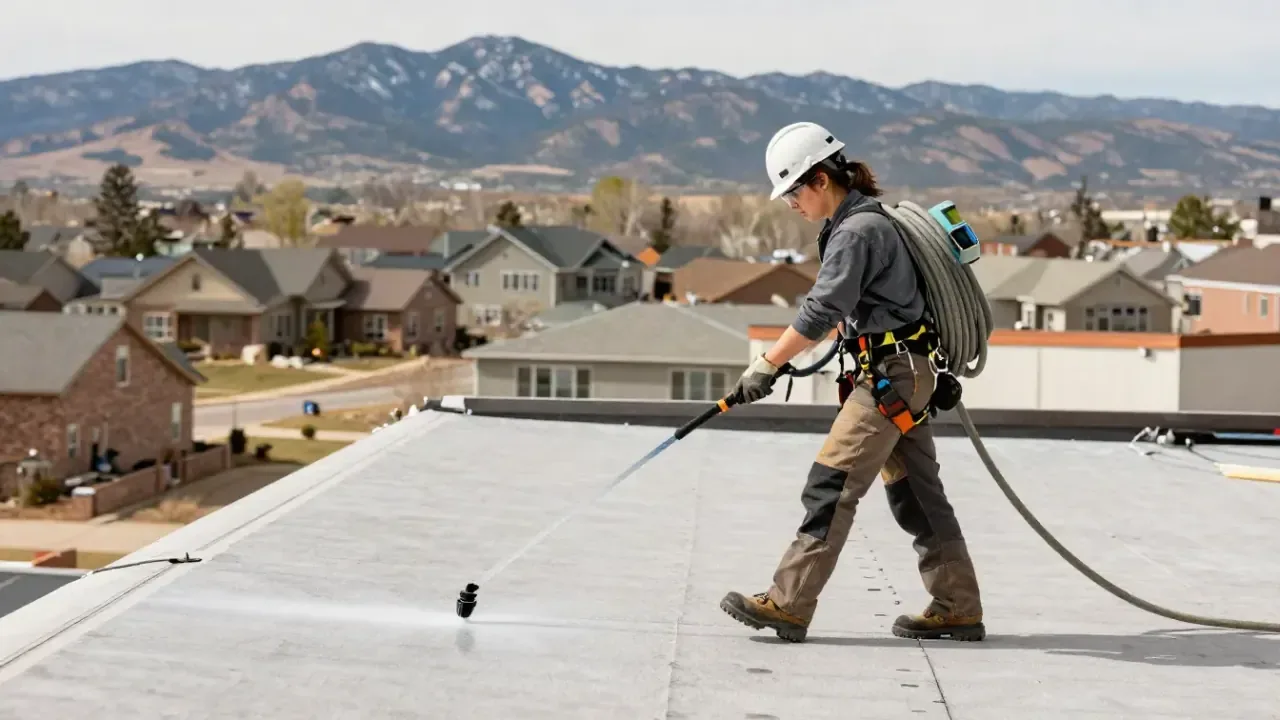 |
Map the Water and Its Route
We record the location, approximate extent and depth of standing water when site conditions allow, then relate it to drains, scuppers, roof edges and adjacent roof elevations. A photograph taken soon after rainfall can show a different condition from one taken after a dry interval, so the inspection notes when the observation occurred. We check strainers and visible flow paths, while avoiding conclusions about concealed slope or deck condition without evidence.
The inspection also looks at membrane seams, penetrations and flashing around the pool. Water that remains near a curb or wall may expose a weak transition, but an adjacent detail is not assumed to be the source. If moisture below the roof surface would change the recommendation, we identify a test area and discuss access and restoration. A roof plan can help the facilities team connect the finding to a drain number, tenant area or previous repair. We can mark the inspected route and distinguish a photographed pool from a location described by staff but not reached during the visit.
Separate Drainage Maintenance From Roof Repair
Leaves, debris, a displaced strainer or a blocked outlet may slow water removal. Other cases involve a low spot, a settled area, an inadequate overflow path or a roof detail that has deteriorated. We describe what is actually present and whether a maintenance step, plumbing work or roofing repair appears relevant. Where an outlet is blocked or a pipe requires service, the building’s drainage contractor may need to take the lead. We can identify the roof-side connection and coordinate access.
Cool-season nights can approach freezing, so persistent water near an exposed edge deserves a timely check without assuming freeze damage. We note the observation date and whether the surface was wet, icy or already clear. That context helps distinguish a drainage condition from a separate weather-related concern. Finished roof height matters when another layer is proposed. New membrane and insulation can change the elevation at drains, doors, curbs and edge metal. A repair scope should account for those transitions before work starts rather than leave them for a field adjustment. If water entry is traced to failed flashing around a curb or wall, the related flashing failure repair may be defined separately from drainage work.
Correct the Confirmed Condition
When the issue is a roof detail, we define the affected membrane, drain flashing, scupper or edge and connect new work to compatible, sound material. If debris removal is the only identified action, the maintenance record can state the area cleared and what follow-up inspection should confirm. We do not describe a simple cleanout as correcting a low slope or concealed deck issue. The proposed work is tied to the condition observed at the site.
If ponding covers a broad area or reappears after maintenance, additional evaluation may be needed to understand the roof plane and outlet capacity. The owner can review drainage adjustments, localized repair or a broader section with documented conditions. A roof drain and scupper scope can identify work at collection points, while replacement planning can assess the assembly and finished heights when a new roof is under consideration.
Coordinate Roof Access and Building Use
Before the visit, the facilities contact identifies roof entry, escorts, restricted rooms, parking and any equipment that requires an authorized operator. A drainage inspection may need access to more than one roof elevation or a drain location above occupied space. We agree on the route and work window, then identify any temporary limits needed below the inspection area. If a drain serves a tenant or building system, its responsible contact can be included in the review.
Lake Hills has retail centers and a growing Bellevue College presence; the Spring District combines office, residential, retail and public-space uses. Those districts have different building operations, yet each site’s contact sets access. If ponding is reported at a Lake Hills commercial property, we confirm the building and roof section before arrival. A separate wind damage roof inspection may be useful when strong weather also shifted perimeter material.
Document the Drainage Recommendation
The report identifies the water location, visible drainage details, membrane condition, photographs and recommended next step. If access was blocked or the roof was inspected after water had drained, that limitation is recorded. If a test opening was approved and found wet insulation or a compromised deck, the notes state where it occurred and how the area was restored. The property team can compare the finding with future inspections and maintenance logs.
A roof condition report can record drainage observations across multiple roof sections without merging them into one general condition. If testing shows that a wider assembly review is necessary, a seam inspection or roof-system assessment may be added. Send the address, reported location, recent maintenance details and roof plan if available. We will document the visible condition and any information needed to confirm the repair path.
Commercial Roofing Questions
Does standing water always mean the roof is leaking?
No. We inspect the pool, nearby drains, membrane and transitions, then report whether a leak or roof defect is visible. The presence of water alone does not establish the cause.
How soon after rain should a ponding area be inspected?
The observation time matters. Share when water was seen and whether it remained after the rain ended. We note site conditions during the visit and identify any follow-up observation that would help.
Can you clear a blocked roof drain?
We can inspect roof-side drainage details and define the work that falls within the roofing scope. If the outlet or piping needs a separate trade, we identify that coordination need.
Can a new roof layer make ponding worse?
Changes in finished height can affect drain bowls, edges and curbs. We review those transitions when a recover or replacement is proposed and document the details that need adjustment.
What should we send before a drainage inspection?
Provide the building address, location of the pool, dates water was observed, recent maintenance records and available roof drawings. The site contact should note access and equipment restrictions.