Commercial roofing for Bellevue buildings, from the first leak call to the closeout file
Commercial roof work begins with a building decision: stop an active leak, understand the roof’s condition, plan maintenance or replace an assembly that no longer supports the property’s needs. Commercial Roofing Contractors Bellevue works with property managers, facility teams, owners and general contractors across Bellevue. We inspect low-slope and metal roofs, document visible conditions and define what the proposed work addresses. The recommendation follows the building’s records and current roof conditions, not a generic promise about what every property needs. We work with low-slope and metal assemblies, occupied buildings and property teams that need clear findings before a capital decision. We explain the work boundary, access assumptions and any inspection limit in plain terms. Bellevue’s local settings vary. Downtown includes high-rise offices, retail, hotels and mixed-use properties. BelRed combines employment uses with transit-oriented redevelopment. Eastgate has suburban office properties and Bellevue College, while Crossroads includes retail and restaurant activity alongside apartments. Those facts help frame access and operations, but each property has its own roof system, schedule and service history. | 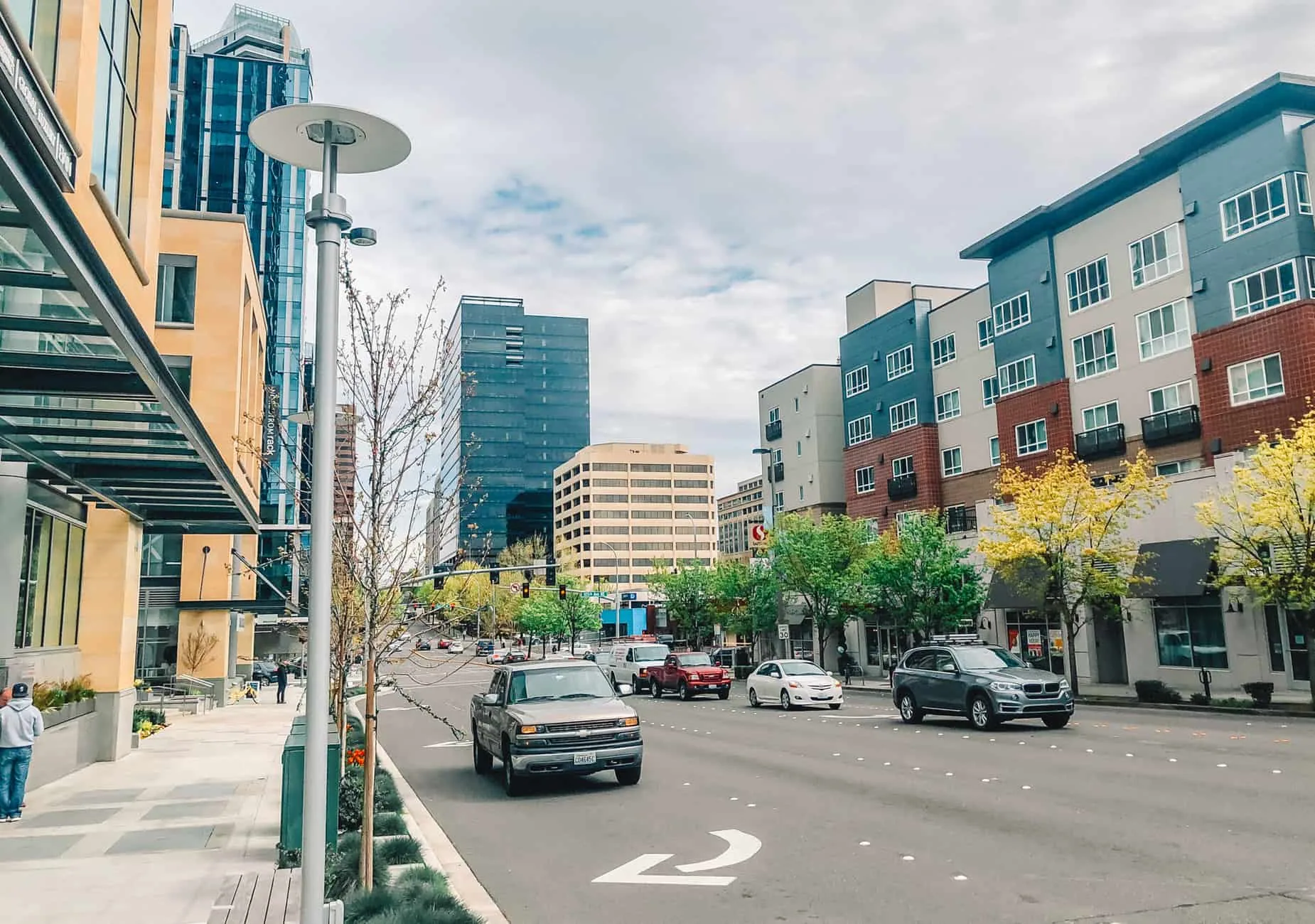 |
A Roof Walk Tied to the Report
For a leak, we ask which room or tenant reported water, when it appeared and what work has already been tried. On the roof, we follow the likely rain path across seams, drains, curbs, penetrations, wall transitions and edges. The visible stain may not line up with the entry point. We photograph relevant conditions by roof zone, compare them with a plan when available and identify areas the crew could not reach.
A visual inspection cannot confirm all conditions beneath a membrane. If damp insulation or a weak deck could widen the work area, we outline a sampling point and a method for closing it, then request approval. A commercial roof inspection or roof condition report can preserve findings, photos, limits and open questions for the owner’s records. We state what is visible and what remains to be established.
Repair, Restore or Replace
A local repair may fit an isolated puncture, open lap or flashing failure when surrounding material can accept a compatible tie-in. We inspect adjoining details and note old patches, repeated reports or drainage conditions that may affect the scope. If the evidence suggests a larger area or a different system decision, we outline the question before expanding the proposal. A commercial roof repair addresses a defined work area; a replacement assessment can define the tear-off scope, insulation needs, drainage work and phase boundaries.
Repair proposals should make the boundary visible. We name the seam, curb, drain or roof zone included, identify the material and describe any preparation or tie-in. If the estimate includes a test allowance, it should say where a sample may be taken and how the opening will be restored. For replacement, removal limits and protection for exposed areas matter as much as the finish material. An owner can compare proposals more fairly when each one states the same area, access assumptions and work sequence. We identify conditions that may change after tear-off instead of treating concealed layers as already known.
We work with TPO, PVC, EPDM, KEE, modified bitumen, built-up roofing, standing seam and retrofit metal, spray foam, and silicone or acrylic coatings. The current assembly, project requirements and condition guide material selection. A coating or recover is not assumed suitable until the surface, attachment, drainage and moisture questions are reviewed. The owner receives the basis for the recommendation and any condition that could change after opening the roof.
Plan the Work Around the Building
Commercial roofing often happens above occupied spaces. We coordinate check-in, service hatch or roof access, staging, loading, tenant notice and operating hours with the property contact. A Downtown Bellevue office may have a different service route than Crossroads retail or an Eastgate campus property. We confirm the address-specific instructions and identify who can approve equipment shutdown, interior access or a test opening.
We also confirm who receives the daily update and who can approve a change if access or another trade affects the plan. A property may need the loading bay kept clear, a tenant entrance left open or a service hatch available only during a narrow window. The manager supplies those requirements, and the work plan records them beside the roof area. If a crew has to pause, the report should identify what has been secured, what remains open and which contact will set the next access time.
For a larger project, the work sequence identifies the roof area for each shift, material movement, protection and a secure stopping condition. If a mechanical or electrical trade must complete a curb or support, the scope identifies the handoff. Weather, access delays and tenant needs can change timing, so the property manager receives an update before the sequence changes. Emergency response is available around the clock, including weekends and holidays, when urgent roof conditions need attention.
Keep Useful Records Over Time
After the work, the property team needs a record that can be used at the next inspection. We identify the address, roof section, visible condition, completed work, photos and any item that remains unresolved. If approved testing exposed moisture or a deck issue, the report notes the location and restoration. Areas not inspected are named so a partial visit is not mistaken for a whole-building assessment.
Owners with several properties can use roof asset management to keep condition and service history by site. roof capital planning can organize recommended work by evidence and timing, while a multi-site roof program can coordinate inspections and status reports. Each property still needs separate findings and access approval. A BelRed office, an Eastgate facility and a Crossroads retail property should not inherit one another’s roof assumptions.
Start With the Property Details
For a first conversation, send the Bellevue address, leak location, roof plan if available, repair history and access window. Include the person who can release entry and coordinate equipment or tenant needs. We will document what can be inspected, explain any testing that could change the scope and outline the next supported action. If the concern is urgent, identify the affected area and a contact who can meet the crew.
Our role is to make the roof decision easier to evaluate. The owner should be able to see what work is proposed, where it applies, what assumptions it carries and which question remains open. A clear record ties that decision to the roof evidence. That record supports a repair, maintenance plan or replacement discussion on the facts available for the building.
Commercial Roofing Questions
Do you only work in Bellevue?
The site focuses on Bellevue and nearby Eastside commercial districts. We confirm the address and scheduling availability before arranging a visit.
What should I expect from an inspection?
We inspect approved roof areas, document visible conditions and access limits, then explain whether repair, testing or broader review is supported.
Which details should I include with a service request?
A Bellevue address, reported room or roof zone, recent leak timing, prior repairs and an access contact help focus the first visit. Include a roof plan when available.
Can you work above an occupied property?
Yes. We confirm tenant notices, roof access, staging, interior protection and daily contacts with the property manager. The work sequence identifies active areas and a secure stopping point.