

Bellevue commercial roof repair addresses failed seams, flashing, punctures and drainage with documented boundaries and access planning for occupied sites.
A loose membrane lap beside a Crossroads loading bay can admit water long before a ceiling stain appears. Bellevue’s cool season brings sustained rain, so a repair starts with the detail that is open and the route water can follow. We inspect the roof zone, check adjacent seams and penetrations, and mark a repair boundary that fits the evidence. For a property manager, the work order should say what will be corrected, what remains uncertain and how access will be handled. Repairs can address membrane punctures, seam separation, curb flashing, metal edges, drain connections and localized insulation damage. The material and preparation depend on the existing system. We identify the roof where possible, check prior patches, and avoid laying a repair over a surface that cannot hold it. In BelRed or Downtown Bellevue, loading, tenant notice and rooftop equipment schedules can affect when the crew reaches the detail. A roof inspection can document broader conditions before isolated repairs are grouped. | 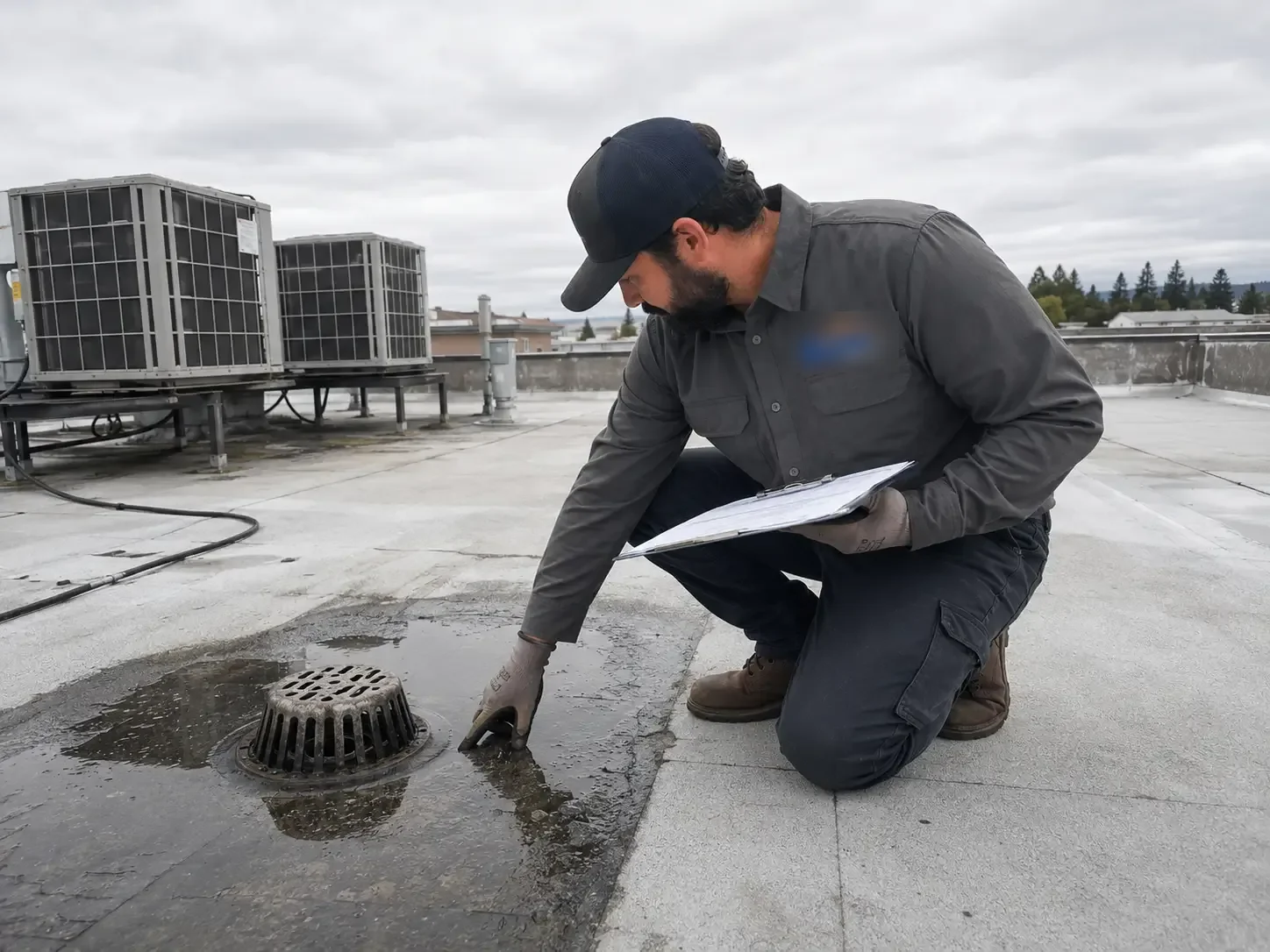 |
Find the Failed Detail
We follow the visible symptom back to a roof location rather than assuming that a ceiling mark sits beneath the opening. Water can move along insulation or deck before it appears inside. The roof walk checks seams, curb corners, flashing transitions, penetrations and drain paths around the reported area. If the entry point cannot be confirmed at the surface, we state whether a test opening or interior access is needed before finalizing the repair.
In the Puget Sound lowlands, repeated cool-season moisture makes drain bowls, scuppers and parapet corners worth reviewing. We note staining, open laps, displaced metal and areas that remain wet, then separate current damage from older repairs. If the roof is dry during the visit, the history of when water appears can help narrow the location. A leak trace can focus on an active water path when the immediate question is where entry occurs.
BelRed grew from a warehouse district and now includes offices, institutional spaces and creative businesses. We use roof plans, visible details and test results to identify the assembly, recording areas where equipment or building rules limit the walk.
Prepare for Compatible Repair
Membrane repairs depend on clean, dry, sound material around the defect. A TPO or PVC seam may require preparation and heat welding; EPDM typically uses a different adhesive and flashing approach; modified bitumen needs compatible reinforcement and surfacing. We identify the system before choosing materials. If an old coating, adhesive or patch interferes with bond, the scope includes removal or another suitable correction instead of a sealant layer that may release.
A puncture in the field can be localized, while a curb leak may require rebuilding the flashing up the vertical face and sealing the termination. A loose edge can call for secure metal and membrane attachment. If test openings show wet insulation, the repair boundary may need to extend to dry material and include a proper tie-in. We itemize the membrane work separately from deck, insulation or drainage work so the manager can see which condition each cost addresses.
Weather affects preparation. A wet roof surface can prevent a reliable bond, and wind or low temperatures can change safe access and material handling. We plan repairs around a dry work window when the system requires it and protect an active opening in the meantime. Sea-Tac normals show much more precipitation in January than July, which makes the calendar relevant to scheduling, but a specific workday still depends on actual roof conditions.
Keep Building Operations Moving
Repair access may involve a service hatch, keyholder, lift, loading bay or rooftop equipment shutdown. We confirm the route and work window with the site contact before arrival. Downtown Bellevue contains offices, hotels and mixed-use properties; Crossroads combines retail and restaurants with apartments. A crew may need to avoid a delivery period or maintain a tenant route even when the repair itself is small. The estimate notes those constraints when they affect setup or duration.
Spring District planning includes offices, housing, retail and public spaces. We confirm staging, material movement and debris removal with the property manager. If interior access is required to inspect a ceiling or protect equipment, that step is identified separately. The contact should know when a roof section is open, how it will be protected during the shift and what condition would require a return visit.
Bellevue’s 2021 International Codes took effect March 15, 2024, with state and city amendments applying to permit plans. Whether a repair needs review depends on the actual work, not the label on the service call. If a scope changes from patching to assembly replacement or substantial deck work, we identify that change for the owner and project team before proceeding.
Repair, Monitor or Replace
A repair is a reasonable choice when the failure is limited and surrounding material remains serviceable. If similar seams have opened across several zones, insulation is wet in multiple test locations or prior patches have lost bond, a larger scope may be worth comparing. We show repair limits and related conditions rather than making a replacement recommendation from one defect. A recover assessment can be considered if the existing assembly and code conditions permit another layer.
Waiting can allow another wet-season cycle to reach insulation or interior finishes. The decision may still be to monitor if a condition is stable and the owner has a documented check date. We explain what change to watch for, such as renewed water entry, a seam edge lifting or ponding that persists after drainage clears. A seam repair or ponding correction can address a specific observed issue with a defined work area.
Photos and findings can also enter a roof condition record for portfolio planning.
Leave a Clear Repair Record
After the work, we photograph the repaired detail and its tie-in, identify materials used and state any adjacent condition that was not included. If moisture extent remains uncertain, the record notes the next test instead of implying the roof is fully dry. The building contact receives a concise handoff for maintenance and any interior restoration that follows.
For service near Eastgate or Factoria, I-90 connects commercial areas and Bellevue College, while I-405 links Bellevue’s downtown and employment districts. Access planning can differ by address even along the same corridor. Share roof history, plans, leak timing, access window and any tenant or equipment restrictions. We can inspect the affected zone, agree on a repair boundary and present a schedule the site can support.
Commercial Roofing Questions
Can you patch over an existing roof repair?
Only if the old repair and surrounding surface provide a compatible, stable base. We check adhesion, material type and whether moisture or movement is present below. A patch over a loose or incompatible layer can fail at the same boundary, so removal or a broader flashing correction may be needed.
How do you keep a repair from expanding unexpectedly?
We document the visible defect, use a test opening where concealed conditions could change the work, and state what is excluded. If tear-back reveals wet insulation or deck damage, we pause at the agreed boundary and present the finding for approval. That keeps the base repair distinct from additional work.
Will Bellevue rain delay the repair?
The surface must meet the preparation requirements of the selected material. A wet roof can prevent a reliable weld or bond, and wind can restrict safe access. We plan the visit around conditions and can use a temporary protection measure for an active opening if a durable repair must wait.
What makes a repair different from maintenance?
Repair corrects a confirmed failure, such as a separated seam or damaged flashing. Maintenance removes debris, checks drains and addresses developing details before they admit water. The report should label each item so the owner can price urgent repair separately from planned upkeep.
What should we include in a Bellevue repair request?
Share the building address, leak timing, affected rooms, known roof material, past repairs and access route. Note loading windows, tenant rules and equipment that cannot be shut down. Those details help us bring compatible materials and set a work boundary that matches the property’s operations.