

Inspect EPDM roofing in Bellevue for seam separation, punctures, shrinkage, wet insulation and drainage problems before choosing a repair or replacement.
A black membrane pulled tight at a parapet can leave the corner flashing under strain. On a Bellevue EPDM roof, we inspect the field sheet, seam joints, perimeter and penetrations to find where movement or water has opened the assembly. The local cool season is wetter than summer, and repeated moisture can expose a small edge defect. We start by tracing the wet area to the roof detail, then establish whether the sheet around it can still support a durable repair. | 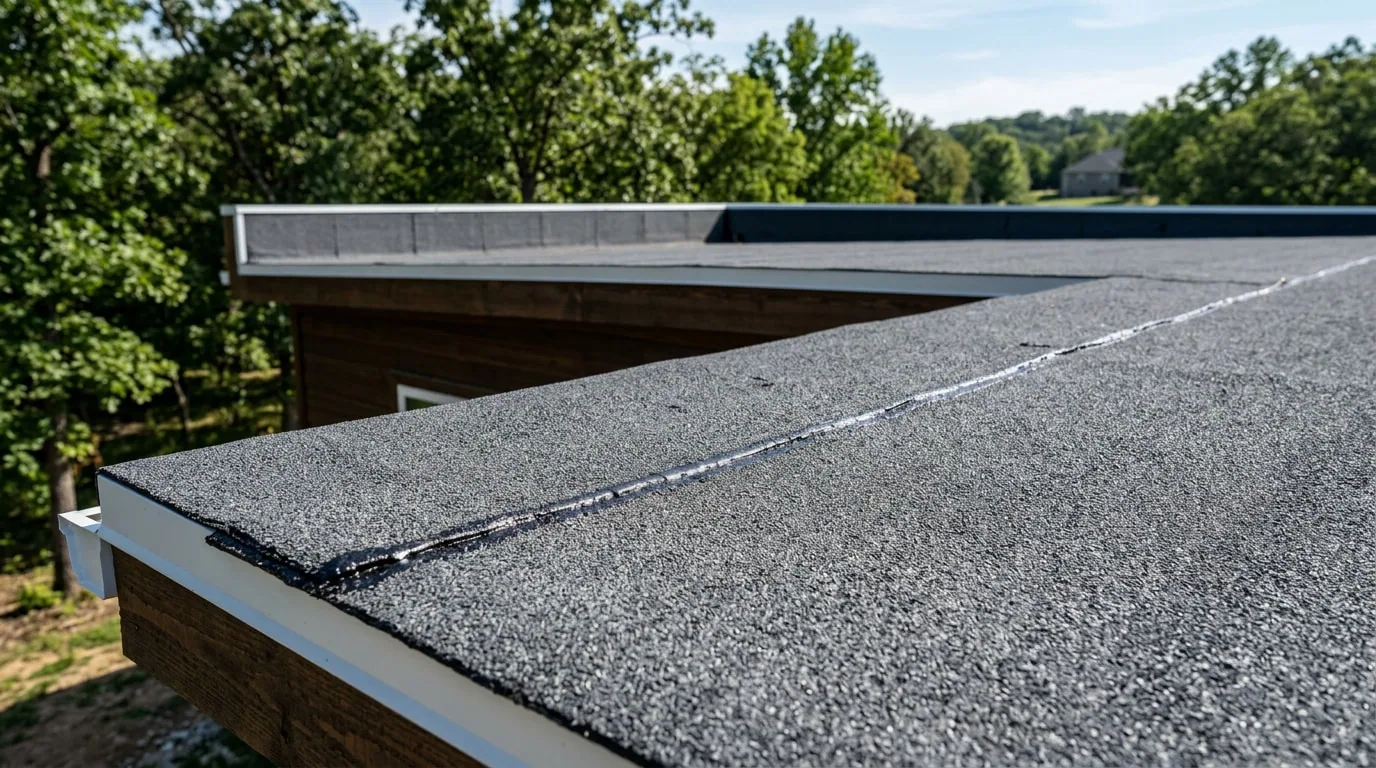 |
EPDM Sheet and Seam Details
Commercial EPDM uses a rubber-based sheet membrane, with seam and edge details that need system-specific checks. Seams and flashing transitions may use tape, adhesive or other system components depending on the installation. We look for lifted edges, fishmouths, wrinkles, shrinkage, punctures, surface damage and repairs that no longer bond. A seam that has opened only at one end can let water move beneath a larger sheet, so we inspect beyond the visible gap.
At corners and walls, tension can pull the membrane away from securement or place stress on the flashing. We check whether the sheet is holding at the edge, whether the termination is intact and whether water can collect behind the detail. Rooftop equipment, service paths and later maintenance can also puncture or abrade the rubber surface. We mark each observation on the roof plan and note the material condition before choosing a repair method.
EPDM repair products need a compatible, clean surface. Dirt, old adhesive or incompatible sealant can keep a patch from bonding. We remove unsound material to a stable edge, prepare the area as required and build a patch that extends beyond the defect. For a repair visit, the written scope names the location, repair boundary and any adjacent condition that could affect it. A roof survey helps when several roof zones need comparison.
Finding the Reach of a Leak
Water inside may appear far from the damaged seam. We compare the reported room, ceiling framing and roof layout, then inspect low areas, drains, penetrations and perimeter transitions above. A roof stain does not prove the closest seam is responsible. We track the potential paths and look for supporting evidence such as an open lap, water line, soft insulation or a failed pipe boot.
If the roof surface hides the extent of moisture, infrared readings can help choose where to open. They show temperature differences, not the material state by themselves. A targeted cut can confirm whether insulation is wet and whether the deck below is affected. A moisture survey can organize those readings and proposed test points. We record each opening and distinguish a confirmed condition from an area that remains closed.
Drain bowls and scuppers often collect debris that changes the rain path across a roof. We inspect outlet strainers, flashing, nearby seams and the surface slope. If ponding sits along an EPDM lap, simply adding a patch may not correct the recurring exposure. A drainage assessment can identify whether an outlet or slope correction belongs alongside seam repair.
Repair Area or New Assembly
A localized patch can be practical when the surrounding membrane is flexible, attached and free of broader damage. We repair open seams, punctures or flashing failure using components compatible with the existing EPDM system. The proposal notes which seams were checked and how the repair connects to the surrounding sheet. If the repair sits near a drain, curb or edge, we include the adjacent transition in the inspection rather than stop at the easiest visible spot.
Replacement deserves review when the sheet has shrunk across several zones, seams repeatedly separate, or wet insulation and deteriorated deck extend beyond isolated areas. We compare repair limits with the findings from test cuts and roof records. A recover review checks whether existing layers can remain, whether drainage heights allow more build-up and whether the attachment can support a new system. The result should explain the basis for recovery or tear-off.
EPDM is not interchangeable with thermoplastic membranes. A TPO assembly uses welded seams, while PVC roofing is another thermoplastic option. A KEE membrane is a PVC alloy. We compare system details with the roof's actual exposure, geometry, drainage and maintenance needs instead of selecting a material by color or name alone.
Work Windows Across Bellevue
Nearby Sea-Tac normals show about 39 inches of annual precipitation, with more than five inches in January and under one inch in July. Wet-season work needs a secure daily closure; adhesive and tape work still requires a dry roof.
Downtown Bellevue is a dense office, hotel, shopping and mixed-use center. A roof visit can require timed deliveries, staff notice and a controlled path from the loading area to the hatch. The Downtown Bellevue service area includes buildings with different access rules; we confirm the one at the property before setting the work sequence. On a multitenant roof, we protect the active route and keep the manager informed about each zone.
I-405 connects Bellevue employment districts including Downtown, Wilburton, Eastgate and Factoria. This corridor can shape how a crew and materials reach a site, while the building's own access controls set the last part of the route. At a property in Factoria, we confirm the roof hatch, loading route and layout before setting the work sequence. We verify these details in the field rather than infer them from the neighborhood.
New EPDM Installation
A new assembly starts with review of deck, insulation, drainage and attachment. We identify deteriorated material, confirm slope and termination details, then secure each work zone. Photos record seams and transitions before they are concealed.
Flashing at curbs and pipes must fit the penetration; edge securement must meet the perimeter design. We identify trades handling equipment moves, conduit changes or structural work. Differences from roof drawings are documented before closure.
Bellevue's 2021 International Codes became effective March 15, 2024, with state and municipal amendments also applicable to permit plans. We review the project's permit documents for the assembly and coordinate the roofing scope accordingly. The applicable code does not identify what is currently on the roof; records, inspection and selective openings establish existing conditions.
Records and Routine Checks
Closeout photos show the repaired or installed membrane, seams, flashing, drains and perimeter details. We note test openings, roof zones not opened and any item outside the roofing scope. A marked plan lets staff compare later leak reports with roof zones and note any area needing review.
Scheduled maintenance can check seams, patches, pipe boots, drain strainers and areas around equipment. An inspection schedule can record new wear before it travels beneath the sheet. On an office roof in Bellevue, coordinating roof access and noting recent mechanical work can make the next visit more useful. We update the record with photos and distinguish old repairs from new findings.
For an EPDM roof in Bellevue, send the address, membrane history, leak date and room, repair records, drain or edge concerns, and access window. We will inspect the roof, explain any test locations and outline a repair or replacement scope with a defined boundary.
Commercial Roofing Questions
Why is the EPDM sheet pulling away at the roof edge?
Shrinkage, attachment condition and detail geometry can all contribute. We inspect the perimeter, sheet tension and flashing to identify whether the separation is local or part of a larger pattern.
Can EPDM seams be repaired with sealant?
A seam repair needs compatible materials and a prepared surface. We check how the existing joint was made and use a repair detail that connects to sound membrane rather than rely on a bead across a weak edge.
Does a roof stain show where EPDM is leaking?
The ceiling location narrows the investigation but may sit away from the opening. We compare the interior report with roof seams, drains and penetrations to trace the possible water route.
How is wet insulation confirmed beneath EPDM?
Infrared readings can indicate where testing may help. A test cut shows the layers at the sampled point, and we document whether the material is wet and how much remains untested.
When should we compare EPDM repair with replacement?
Repeated seam movement, widespread shrinkage, wet insulation or deteriorated deck may point beyond an isolated patch. We map the evidence and compare repair limits with a new assembly or recover option.