Roof inspections, leak repair and phased replacement planning for Bellevue hotels, event venues and hospitality property portfolios.
A roof repair at an occupied hotel needs to account for guests, staff, deliveries and the building’s operating schedule. We begin with the property contact and the reported area, then inspect the roof zone connected to the interior condition. Drains, seams, curbs and perimeter transitions are checked and photographed. If water may have traveled through the assembly, the report describes what is visible and what would require testing. That gives the owner a defined repair scope without treating a guest-room stain as proof of a specific roof failure. Downtown Bellevue has hotels among offices, retail and mixed-use properties. The Spring District is served by East Link; its station-area plan calls for office, residential, retail and public-space uses. A hotel or event property has its own guest, service and loading routes, so we confirm those with the contact before comparing commercial roof repair with replacement planning. | 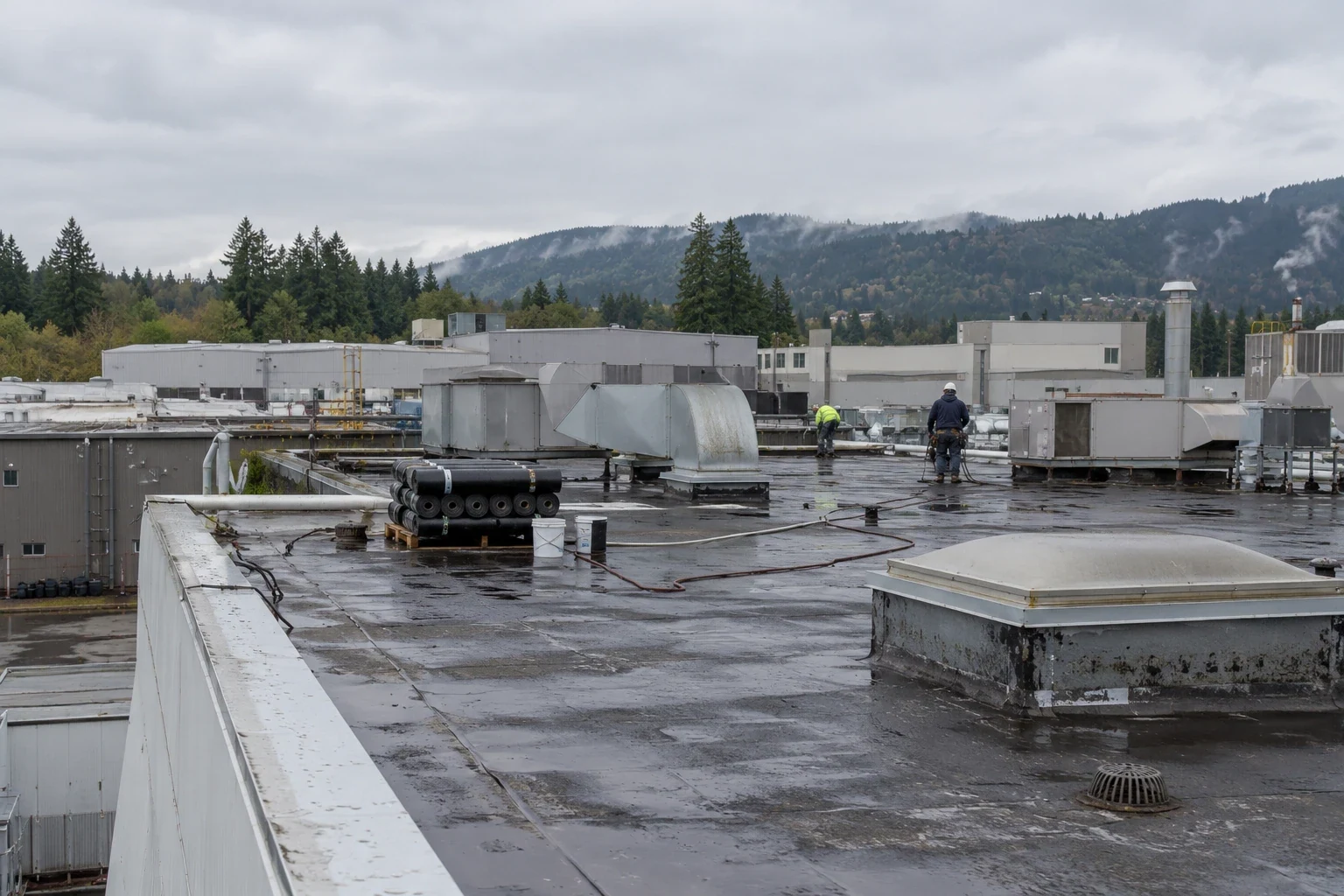 |
Trace the Complaint to a Roof Zone
The front desk or engineering team can help identify the room, meeting area, service corridor or amenity where water appeared. We confirm the date, whether the issue recurred and any temporary protection already in place. On the roof, we inspect nearby penetrations, drains and membrane transitions, then relate the condition to the reported area. A stain may be offset from the entry point, and water can follow a deck or insulation layer before it becomes visible inside.
If the source is not evident, we record the remaining possibilities and explain whether a test opening would change the repair recommendation. The owner approves any intrusive testing and restoration method. When problems extend beyond a localized detail, a replacement assessment can define roof sections, removal limits, deck review and phased dry-in. We distinguish confirmed defects from assumptions that remain contingent on access or testing.
Protect Guest and Event Operations
Before a crew arrives, the property contact identifies check-in periods, event schedules, loading needs, guest entrances and rooms that require notice. We confirm where the crew will check in, how it reaches the roof and where materials can be staged without blocking operations. If work is above occupied rooms, the hotel decides whether a room move, notification or temporary restriction is appropriate. Roofing staff coordinate with the authorized contact rather than make guest-service decisions.
A one-day repair may fit a quieter window, while a larger project can be divided into roof sections and timed around events or high-occupancy dates. Each shift ends with a documented secure condition for the exposed area and a plan for the next stage. If a corridor or service door must stay open, the work plan identifies a route that preserves building access. The property team can then communicate a specific area and time instead of a general warning about roof work.
Review Rooftop Equipment and Drainage
Hotels can have kitchen exhaust, ventilation, refrigeration, plumbing and other roof-mounted systems serving different parts of the building. We inspect flashing around the equipment associated with the report and note any condition that needs a mechanical contractor. Roofing crews do not operate those systems or decide shutdown timing. The hotel’s engineer identifies the authorized technician and any access restriction before work near a unit begins.
We also review drain inlets, overflow routes, low roof sections, parapets and edges. A clear drain cover does not establish that the roof drains properly, so nearby water marks and flow paths are included in the notes. A new membrane layer changes finished height at drains and curbs, and a tear-off can reveal conditions that affect the detail. If a dedicated drainage repair is needed, drain and scupper service can be shown separately from the roof-system recommendation.
Coordinate Work Across Hotel Properties
A hotel group may want to compare open leaks, completed work and future capital needs across several addresses. We can keep common fields for building, roof section, photo, repair action and unresolved condition, while preserving a separate record for each property. The portfolio view should not flatten differences in roof age, assembly, equipment or access. When guest operations limit inspection of a particular section, that limitation is included so the owner can decide whether to schedule another visit.
At a hotel or event property, the site contact provides the actual delivery window, parking rule and approved roof path. Retail operators face a related mix of public access and service activity; retail and restaurant chain roofing considers those locations. A public venue or civic facility may need separate agency approvals, as described for public agency roofing. For a group program, the central team can define how a site reports urgent leaks, who approves testing and where the completed photos are stored. Each hotel still confirms its own access, occupancy and equipment needs. That balance keeps portfolio reporting consistent while preserving the details that determine what can be repaired safely at one property. We can also note open approvals and the date of the next inspection.
Close Out With an Operations-Ready Record
Closeout identifies the property, roof zone, reported condition, repair completed and any item that still needs monitoring or testing. Photos show the finished detail and the point where work stopped. If a test confirms wet insulation or deck damage, the record notes the location and how the opening was restored. The hotel engineering team can add the result to its maintenance history and connect it with any later guest or staff report.
A roof condition report can group immediate repairs and longer-range needs for the owner. A replacement review compares the exposed substrate, fastening approach, drainage profile and hotel operations. One candidate is TPO roofing; final selection depends on documented site conditions. A Downtown Bellevue roof visit starts with the property contact’s confirmed entry and guest-operation requirements. Send the building list, roof plans, open leak reports and event calendar for a coordinated review.
Commercial Roofing Questions
Can roofing work happen while a hotel is occupied?
It can when the owner approves the work zone, access route and schedule. We coordinate with hotel staff around guest areas, events, deliveries and any rooms that need notice.
How do you limit disruption above guest rooms?
The property contact identifies occupied or sensitive areas and decides whether notice or a temporary restriction is needed. We define the roof section and work window before mobilization.
Can you coordinate multiple hotels?
Yes. We can plan visits across a portfolio and keep each property’s findings, access limits and repair scope separate for review by the local and central teams.
Will you check rooftop kitchen equipment?
We inspect roof flashing and membrane around relevant penetrations. The hotel’s authorized mechanical technician remains responsible for equipment operation, shutdowns and service.
What should we send before a roof review?
Share the property address, leak history, available roof plans, event or occupancy constraints and engineering contact. That lets us confirm the entry path and prepare a focused inspection.