Roof inspections, leak repair and coordinated replacement planning for Bellevue retail centers, restaurants and multi-site brands.
A leak reported at a store or restaurant makes locating the affected area the first priority, without disrupting customers, staff or deliveries. We confirm the property, tenant space and leak timing, then inspect the related roof zone, drains, seams, equipment curbs and edge details. The ceiling stain may be separate from the entry point, so the written scope distinguishes observed damage from the path that still needs verification. That gives the local manager and portfolio contact a clear repair boundary to review. Crossroads combines shopping, entertainment, cultural activity and services beside apartments and established neighborhoods. The Spring District is a mixed-use redevelopment within BelRed, with planned office, housing, retail and public spaces. A multi-location brand confirms delivery timing and access at each address. We review those conditions before recommending commercial roof repair or a larger project. | 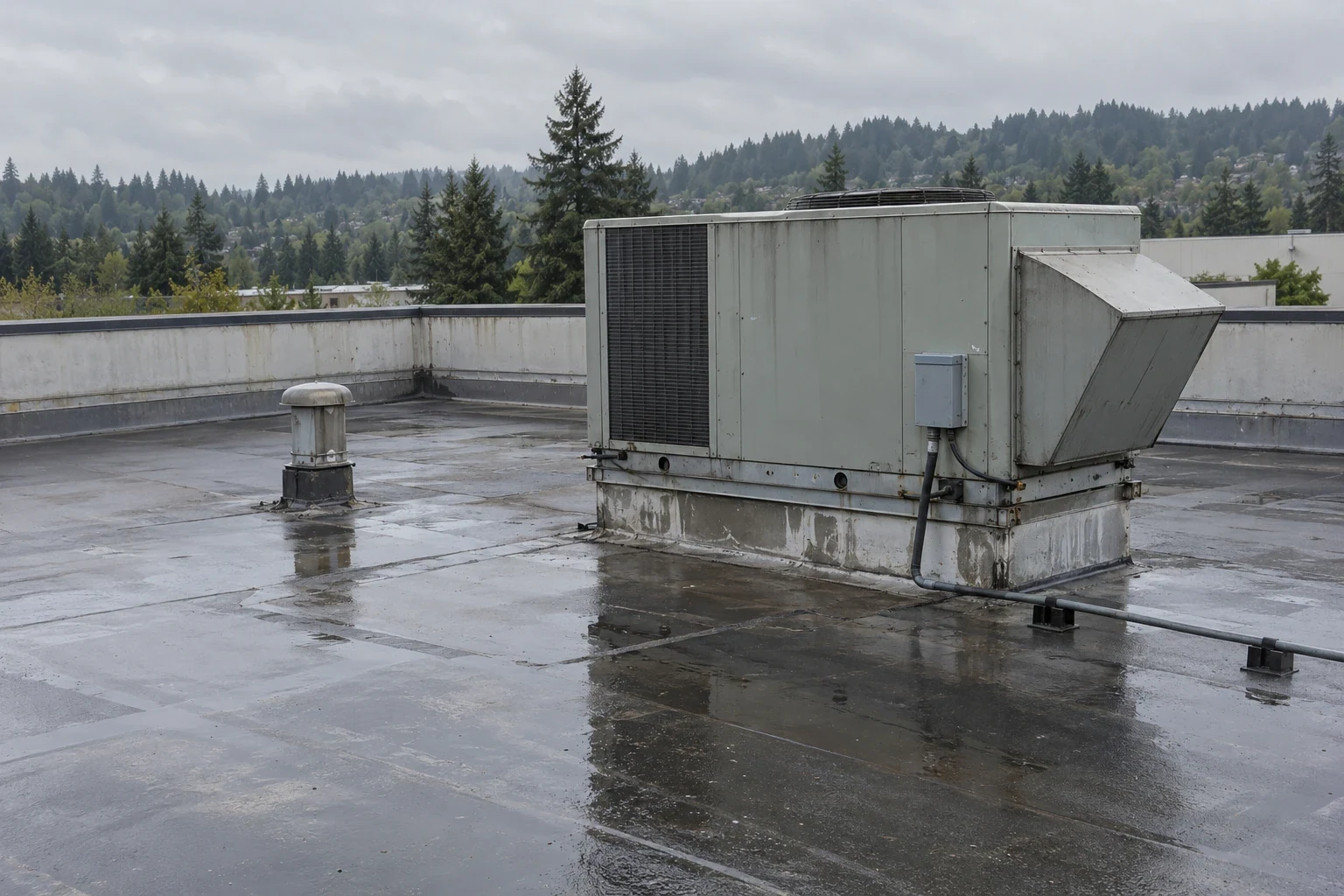 |
Find the Source Without Disrupting the Store
We ask the manager to identify the room, sales floor, kitchen, stock area or service corridor where water appeared. The report includes when it happened, what weather was present and whether the condition has returned. On the roof, we inspect nearby drains, seams, penetrations and transitions, and photograph visible defects. If the water could have traveled through the assembly, we explain that route as a possibility until testing confirms what is wet. The inspection should not turn one stain into an unsupported roof-wide conclusion.
For an active leak, the immediate scope can separate temporary protection from permanent repair. We identify the area that can be safely reached, note any limitation and agree on how the store will be informed before roof access or interior work. When defects recur across a larger section, a replacement assessment can document the affected area, removal sequence, deck review and daily dry-in requirements for the owner’s approval.
Plan Work Around Trading Hours and Deliveries
Retail properties often combine opening hours, food service, loading, waste pickup and customer access. The store or property contact tells us which entrances, sidewalks, parking areas and loading doors must remain usable. We confirm check-in, staging, roof access and the planned work window before bringing material to the site. If a repair affects a dining room, kitchen exhaust area or public path, the manager decides what notice or temporary restriction is needed.
A chain-wide contact can help set consistent reporting fields, while the local manager confirms how each address operates. A Crossroads storefront and a Spring District ground-floor tenant can have different access conditions; confirm each service entrance and delivery route with its contact. We record the actual site instructions rather than applying a standard schedule to every location. A multi-day project receives a work-zone plan, a daily roof-secure condition and a named contact for the next update.
Check Kitchen Exhaust, Drains and Roof Openings
Commercial roofs above restaurants and retail stores may have exhaust, refrigeration, HVAC, plumbing or sign-related penetrations. We inspect membrane and flashing around the equipment tied to the report and note which systems belong to other service vendors. We do not operate rooftop equipment. If a technician needs to shut down, protect or move a unit, the property contact coordinates that work before roofing begins. This separates the roofing boundary from the mechanical work and helps prevent an unplanned interruption.
Drain inlets, overflow routes, low areas and parapet edges are checked alongside the reported leak. A blocked path or standing water should be documented with its location rather than described generally as a drainage problem. If the building needs a dedicated drainage scope, drain and scupper service can be listed alongside membrane work. We review curb heights, finished roof level and edge details when a new layer or tear-off is being considered.
Give Each Location a Comparable Record
A brand may want a simple view of open leaks, completed repairs, testing and capital needs across its Bellevue-area addresses. We can use consistent fields for property, tenant space, roof zone, photo, work boundary and unresolved condition, while keeping the evidence tied to each building. This makes the portfolio easier to sort without pretending that buildings share one roof age, assembly or warranty. If one location cannot be inspected because access is restricted, the record states what remains unknown.
Hotel portfolios bring guest access, event schedules and occupied-room concerns into the same discussion; our hospitality group roofing page addresses those property needs. A general contractor involved in a store renovation may need roofing interfaces coordinated with signage, equipment or façade work, as covered in general contractor projects. We identify the right contact and responsibility for each item instead of blending several trades into one assumed scope. For recurring programs, the portfolio lead can set a preferred reporting cadence and escalation contact, while each store manager supplies the local access details. The record can distinguish an active water event from a scheduled condition review, which helps central staff route approvals to the right level. A consistent file name and property identifier also make it easier to retrieve photographs and repair notes when a location changes managers or undergoes renovation.
Close the Loop With the Local Manager
After the repair, closeout notes identify the store, roof zone, defect, work performed and any condition that still needs testing or another trade. Photos show the completed detail and the final appearance of the work area. If testing found wet insulation or deck damage, the location and restoration are recorded. The property team can use that information to answer a later question from store operations without reconstructing the visit from memory.
A roof condition report can group locations by priority while preserving each address’s evidence. If replacement is recommended, TPO roofing or another compatible assembly is reviewed against the existing deck, attachment, drainage and use. A Crossroads roof inspection begins with the property contact’s approved route and store-specific hours. Send the site list, manager contacts, leak notes and available roof plans for a coordinated review.
Commercial Roofing Questions
Can the store remain open during roof work?
It may, when the property approves the work area, schedule and access plan. We coordinate around customer paths, deliveries and any room or entrance the manager identifies as restricted.
Can one contact report issues for several locations?
Yes. A portfolio contact can submit a location list, and we will confirm the property-specific access rules and local manager for each inspection.
How do you handle a restaurant kitchen leak?
We identify the reported room and inspect the corresponding roof details, including nearby penetrations and equipment curbs. The restaurant contact coordinates any mechanical or kitchen shutdown decisions.
Will you inspect drains as part of the roof visit?
We check relevant inlets, overflow routes and low areas near the reported condition. If drainage correction requires separate work, it can be described as a distinct scope.
What information helps estimate multi-site work?
Property addresses, roof plans if available, leak dates, prior repairs, store hours and access contacts help us plan. Each estimate remains tied to its observed roof zones and assumptions.