

Hotel roofing in Bellevue needs quiet access, guest protection and leak records. We plan repairs around occupied rooms, deliveries and events.
A leak above a guest room can turn into a front-desk issue before the roof is inspected. The hotel team can identify the room, time and weather related to the report, while we trace the likely path through the roof details above. We inspect seams, drains, curbs and perimeter transitions, then document what can be confirmed. Bellevue’s wet season can expose small flashing defects across repeated storms, so the repair should follow the roof condition rather than stop at the ceiling mark. Downtown Bellevue includes hotels among its offices, retail and mixed-use buildings. The Spring District plan also anticipates hotels alongside offices, housing and public spaces. A hotel’s guest schedule, meeting calendar, deliveries and security procedures shape how crews reach the roof. We confirm those details with the property contact before comparing commercial roof repair with broader work. | 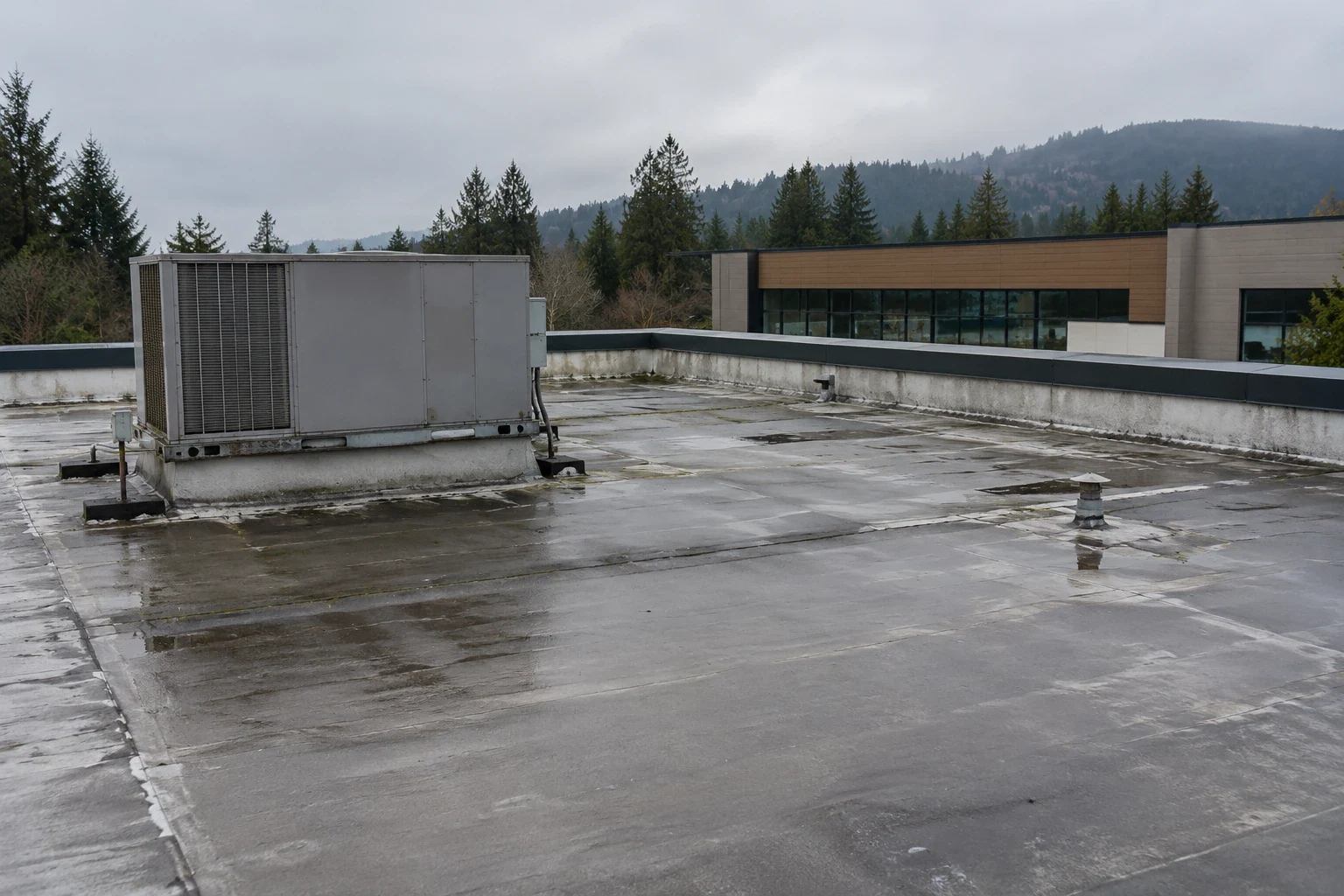 |
Trace the Reported Leak to a Roof Detail
Water can travel over a deck or through insulation before it appears in a room, so the guest-room location is one clue rather than proof of the entry point. We ask whether the mark followed rain, whether staff saw water at another level and whether a previous repair was made. With the building’s roof plan, we match the room to nearby drains, seams, equipment curbs and wall edges. Photos record the location and any defect that is visible.
Hotels can have large mechanical equipment, roof penetrations, skylights and access paths serving multiple floors. We inspect the membrane around those details and note loose flashing, lifted patches or areas where water remains. If moisture extent would change the recommendation, we explain where a test opening would answer the question. The owner can then compare a contained repair with a replacement assessment based on verified conditions and the hotel’s operating plan.
Keep Guests and Staff Out of the Work Zone
Before a visit, the hotel contact identifies guest areas, meeting rooms, loading access, service stairwells and designated back-of-house corridors, roof entry rules and any quiet periods. We coordinate material movement away from check-in, event arrival and food service when possible. If work is above occupied rooms, the manager decides what interior protection or guest communication is needed. We keep the roof zone and daily stopping point clear so staff can understand where crews are working.
Downtown Bellevue’s commercial center includes hotels, high-rise offices and shops, while the Spring District’s planned mix includes housing and public space. Those surroundings can affect parking, noise and delivery timing. We confirm the actual building’s requirements rather than using a district schedule. For a property with long-term residential units, the access and occupant plan may resemble apartment roofing; restaurant areas have different prep and service periods, as with restaurant roofing. The hotel’s manager sets the approved sequence.
Inspect Drains and Rooftop Systems
We check drains, overflow paths, low areas, membrane seams and flashing at mechanical curbs near the reported leak. A hotel may also have exhausts, communication lines, rooftop terraces or equipment supports that require controlled access. The inspection records whether a detail is visibly open or whether further testing is needed. If a new roof layer is considered, drain height and curb flashing have to work with the finished surface.
We coordinate with facilities staff for any unit that requires a technician, escort or shutdown approval. Roofing crews do not operate mechanical systems. The property contact identifies service routes and equipment that must remain accessible during the work. If drainage needs specific correction, a drain and scupper scope can be included with the membrane repair. Any added work is described before the crew moves beyond the approved boundary.
Plan Around Guest and Event Schedules
Hotel projects are easier to coordinate when the calendar is shared before work starts. We ask about occupancy periods, conferences, weddings, scheduled deliveries, room turnover and any restricted dates. The contact can identify approved parking and staging, the contractor check-in process and routes that keep guest paths clear. A larger replacement can be divided into sections, with each area closed and protected before crews leave.
Downtown Bellevue has strong transit access and a dense mix of commercial buildings, while Spring District is planned as a transit-oriented neighborhood with office, housing, retail and public spaces. These conditions can influence traffic and curb access, but the hotel establishes its own process. A Downtown Bellevue roof inspection starts with the property’s entry and event rules, then sets a work window that facilities staff can communicate to guest-service teams.
Document the Roof Work for Hotel Operations
At closeout, the hotel team receives the roof location, photos, repair performed and any condition that remains unverified. If water was traced from a guest area, the record connects that report to the roof zone without including private guest information. A follow-up note can identify a detail to watch after future rain or the next equipment service visit. This makes maintenance more consistent when staff or vendors change.
For hotel ownership groups, a roof condition report can compare open repairs, recurring leaks and planned work across properties. If a new system is indicated, we can assess options such as EPDM roofing after reviewing deck, insulation, attachment, drainage and building use. Send the Bellevue address, affected room or area, event schedule, roof plan and service history. We will document the findings and outline the next step.
Commercial Roofing Questions
Can hotel roof work happen while guests are staying onsite?
Yes, when the property approves the work zone, access route and schedule. We coordinate noise-sensitive periods, deliveries and occupied areas with the hotel contact. Larger work may need phases so each section can be secured before the crew leaves.
How do you investigate a leak above a guest room?
We use the room location and timing to guide inspection of nearby seams, drains, curbs and perimeter details. Water may travel before appearing indoors. We document visible evidence and tell the property team when testing is needed to verify the assembly.
Will the roofer contact hotel guests directly?
The hotel remains responsible for guest communication and any room changes. We provide the property contact with the affected work zone and expected timing so the hotel can decide what notices are appropriate. We coordinate access through the hotel’s approved process.
What should a hotel share before scheduling roof work?
Provide the Bellevue address, affected room or common area, occupancy or event dates, access rules, delivery hours and maintenance records. Tell us about restricted roof areas and equipment that needs a technician. We will confirm staging and the visit window.
Does a recurring hotel leak call for replacement?
Not automatically. We inspect repair history, membrane condition, flashing and moisture indicators to see whether a local repair remains reasonable. If multiple areas show similar failure, we explain the evidence for a wider plan and identify any testing required.