

Inspection and repair of open, split or failing commercial roof seams across Bellevue business properties, with clear scope and documentation.
An open roof seam may appear as a narrow split, lifted lap or line where the membrane no longer holds. It can allow water into the assembly, but its size alone does not show how far moisture has traveled. We inspect the affected joint and adjacent material, photograph its length and condition, and record whether the roof type and attachment can be identified. The repair scope states what is confirmed and which nearby areas still need inspection. Overlake’s employment center and Downtown Bellevue’s dense office district contain different building layouts and operating schedules. Both experience the region’s cool-season rain, so maintenance records and leak timing can help focus a seam review. We confirm the building access plan before recommending commercial roof repair. | 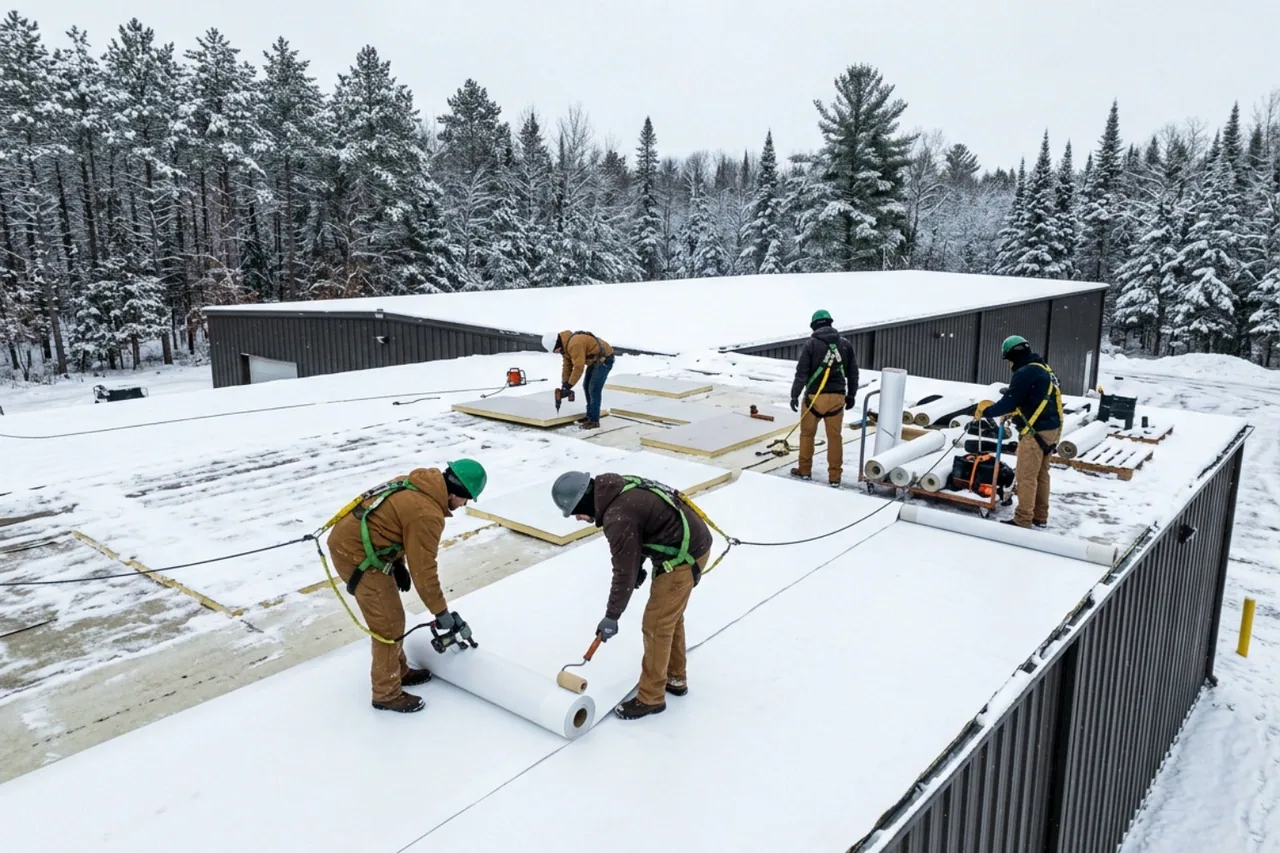 |
Find the Full Extent of the Open Joint
We start with the reported interior location and the timing of the water entry. On the roof, the inspection examines the reported seam, nearby intersections, patches, terminations and changes in plane. We check whether the joint has separated, whether the membrane edges are sound and whether previous repair material is affecting the connection. A marked roof plan can help identify the seam by grid or section so future work returns to the same place.
Water may move below a membrane before it appears inside. We consider nearby slopes, drains, curbs and wall edges while documenting what can be seen. If testing is likely to change the repair limit, we propose a specific location and a restoration plan for owner approval. We do not use a single wet ceiling mark to claim that the entire seam or roof is compromised. Any inaccessible segment is noted rather than treated as inspected. We can return when the owner approves a safe route.
Understand the Seam Material and Condition
A seam can open because of age, movement, poor adhesion, incompatible prior work or damage from later foot traffic. The inspection notes the membrane material when identifiable and considers how the lap was made. We also check whether the edge is clean, secure and suitable for a repair. If a prior patch covers the original joint, the report distinguishes the patch condition from the seam beneath it, which may not be visible.
Adjacent flashing and penetrations matter because several details can meet at one point. An opening near a curb may be a flashing issue rather than a long field seam. We document the junction and, when appropriate, scope a flashing failure repair separately. A membrane cut or puncture can also interrupt an otherwise intact lap, and a puncture inspection can isolate that damage. We note whether the seam runs through a traffic path or beside rooftop equipment, since access may explain wear or determine when the area can be repaired. If a more complete roof walk is needed, the facilities contact can identify locations that require an escort or fall-protection plan.
Close the Seam Using a Compatible Method
Repair begins by confirming the membrane type and the method that can create a durable connection with the existing material. The work area is prepared, loose or contaminated material is addressed and the split is joined to sound surrounding membrane. We follow the system’s compatible repair approach and inspect the finished lap for continuity. Photographs record the joint before and after work, with the location tied to the roof plan where one is available.
If the seam is brittle, wet or detached over a longer run, limiting work to the visible opening may leave adjacent failure unaddressed. We describe the proposed length and any substrate check needed before expanding the repair. An isolated patch should not be represented as resolving a broader assembly issue. Where multiple leaks suggest a larger roof concern, a replacement review can consider the roof section and hidden conditions separately from the immediate seam repair. The work record identifies any material transition and the point where new repair material ends. If a repair crosses an earlier patch, we describe how the new work meets that area and whether the old patch remains visible around the perimeter. This gives the next inspector a clear reference instead of a broad note that a seam was “fixed.”
Schedule Work for Occupied Bellevue Buildings
Property staff identify roof entry, tenant areas, escort rules, equipment zones, parking and material handling before mobilization. A seam repair may require a short work window, while repeated locations can require access across more than one roof section. We agree on the order of work and how the crew will keep the roof secure if weather changes. If interior inspection is needed, the owner coordinates room access and any required tenant notice.
Overlake sits along SR 520 and has a substantial technology and employment base; Downtown Bellevue includes offices, retail and cultural destinations. These differences can affect delivery and access, but the site contact’s requirements govern. A roof visit in Overlake is confirmed with the property’s designated contact and entry route. Wind can lift perimeter metal or membrane laps. A wind-damage roof inspection checks edge attachment and the adjacent field before repair.
Keep the Seam Repair Easy to Recheck
Closeout notes identify the roof zone, seam location, observed separation, repair method and any limit on the inspection. Photos show the tie-in and adjacent conditions. If a test was approved, the record states what was found and how the opening was restored. The facility team can use the location reference for routine inspection and compare the seam with a later report without relying on a verbal description.
A roof condition report can track seam observations alongside unrelated repairs while preserving their separate locations. If a drain or overflow contributes to water exposure in the area, a dedicated drain and scupper scope can be added. Send the building address, leak notes, roof plan and access details. We will document what was repaired and identify any remaining question requiring a new inspection.
Commercial Roofing Questions
Can you repair a split membrane seam?
We inspect the membrane, joint length and adjacent material first. If the existing roof supports a compatible repair, the scope identifies the work area and tie-in method.
Does an open seam mean water has reached the deck?
Not necessarily. We document visible conditions and identify whether testing is needed to determine moisture below the surface.
Can a seam repair be made during normal business hours?
The work window depends on access, occupant needs, weather and the roof location. We coordinate those details with the property contact before scheduling.
How do you document a repaired seam?
The closeout records its roof zone, observed condition, repair method and photographs. An approved test or access limitation is also noted.
What should we provide for an inspection?
Share the property address, leak timing, any roof plan, earlier repair information and site entry rules. A marked interior location can help focus the roof walk.