

Commercial roof membrane puncture inspection and repair for Bellevue facilities, with access documentation and clear follow-up recommendations.
A puncture in a commercial roof may come from dropped hardware, a sharp object, maintenance activity or repeated foot traffic. The opening can be small while the surrounding membrane or insulation is affected beyond what is visible. We inspect the reported spot, the travel path and nearby roof details, then photograph the surface and define the repair area. The report distinguishes a confirmed cut or impact from a suspected moisture path below the membrane. Eastgate and Factoria include suburban office properties near institutional uses, so the property contact confirms the access route for each building. A roof visit must account for the building’s authorized routes and any technician working in the same area. We confirm those details with facilities staff, including the approved service route and roof-access log, before planning commercial roof repair. | 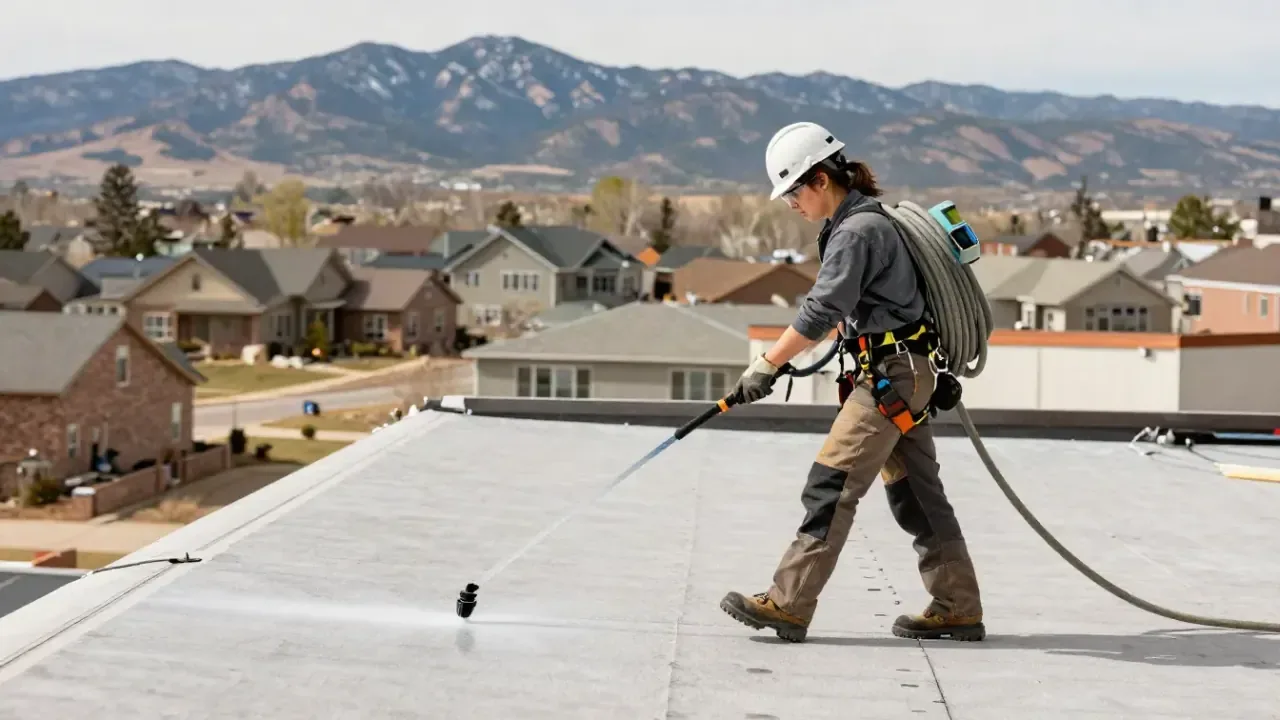 |
Locate the Puncture and Inspect Around It
We ask where the damage was reported, when it was first noticed and whether a contractor or building technician has accessed the roof since then. The inspection photographs the opening with a scale where practical and notes its distance from a seam, curb, walkway or equipment base. We check surrounding membrane for scrapes, indentation, loose material and signs that water may have entered. The condition and inspection limits are recorded before any patch is placed.
A small surface cut does not prove the insulation or deck is dry. If the assembly condition would change repair scope, we can propose a test opening for owner approval and identify how it will be protected and restored. If the puncture is within a field seam, the scope may need to address both details; a separate seam failure review can clarify the lap condition. We do not extend repairs to unobserved areas without explaining why.
Understand How the Roof Was Accessed
Maintenance logs can help establish which vendors, technicians or construction crews visited the roof before the damage was found. We ask whether materials were staged, tools used, equipment serviced or a new penetration added. This context supports a focused inspection but does not, by itself, establish who caused a roof defect. The report records the information supplied by the owner separately from direct observations. We can label that context as reported history.
Common service paths may have walkway pads, designated access points or equipment clearances. We inspect whether those protections are present and note any loose or displaced sections near the puncture. If another trade needs to reach a unit, the property contact can identify the approved route before a repair is completed. Where rooftop equipment may need shutdown or movement, the authorized technician handles the system and confirms the work window.
Patch the Opening With a Roof-Compatible Detail
Repair material and method depend on the existing membrane and the puncture’s location. We prepare a clean, sound area, remove material that prevents adhesion and form a repair that extends beyond the visible opening into secure surrounding roof. At a seam, curb or penetration, the detail must connect with the existing flashing rather than cover the junction without a proper tie-in. We inspect the finished patch and photograph its boundary for the building file.
If the puncture has affected insulation, deck or a larger membrane area, the scope defines those limits based on inspection or approved testing. A patch alone should not be described as resolving a concealed condition that was not checked. If wind or debris also displaced perimeter components, a wind damage roof repair can document those details separately. A broad pattern of cuts or wear may require a wider condition review instead of a series of unconnected patches.
Reduce Repeat Damage During Roof Service
After repair, facilities staff can confirm which routes are approved for future service and whether temporary material staging needs another location. Walkway pads or protective boards may be appropriate where regular access crosses vulnerable membrane, but their placement should fit the roof system and drainage path. Equipment contractors should know how to reach units without dragging tools or hardware across the roof. The building owner decides which vendors receive those instructions. A simple sign-in record can identify who accessed the roof and which work zone was active that day. When several contractors share a roof, the facility team can set a contact for questions about material storage, walkway protection and new penetrations. These steps do not replace inspection, but they make later condition reports more useful by preserving the context around the work.
Factoria’s suburban office setting and Eastgate’s commercial and college uses can involve separate property managers and service providers. We record the actual access contact for the building rather than assume one manager covers every address. A Factoria roof visit begins with the approved entry path and the facility contact’s equipment restrictions. If standing water is also present near the damaged spot, a ponding water inspection can examine that concern as a separate condition.
Leave Photos and a Clear Repair Boundary
Closeout names the property, roof zone, puncture location, repair method and any adjacent condition that remains unverified. The final photos show the repaired area and its relation to nearby seams or equipment. If the assembly was tested, the report records what was found and how the opening was restored. A future technician can use the same roof reference when servicing nearby equipment or reviewing a later leak report. The owner can retain the before-and-after images with the vendor work order and note whether follow-up is due after the next roof service.
A roof condition report can track other visible damage without combining it with the puncture scope. If a repair reveals failed flashing at a curb or wall, a flashing assessment can define that detail. Send the address, incident notes, vendor access history, roof plan and any photos made before temporary protection. We will identify the work completed and the next step for any remaining question.
Commercial Roofing Questions
Can a small puncture cause a ceiling leak?
It can provide an entry point, but water may travel before it appears inside. We inspect the roof detail and report whether moisture extent needs further testing.
Do you identify who punctured the membrane?
We document visible roof conditions and can note access history provided by the owner. Determining responsibility is outside a roofing condition inspection.
Can maintenance vendors still use the roof after repair?
Yes, when the owner confirms an approved route and any protection needed for recurring service. We can note access concerns found during the inspection.
Will you test the insulation beneath a puncture?
Testing is proposed when the result could change the work boundary or recommendation. The owner approves the location and restoration method before an opening is made.
What should we provide when reporting puncture damage?
Send the address, approximate roof location, date noticed, service visits near that area and any photographs taken before a patch or temporary cover was installed.