

Review rooftop equipment curbs and supports in Bellevue. We trace leaks, check flashing and attachment, then scope repairs around live building systems.
A damp ceiling below an HVAC curb in BelRed can start at a corner that looks dry from the roof hatch. The first check is the curb base, not the equipment cabinet: look for split flashing, a loose membrane lap, rust at a support, or water held behind a pipe stand. We map each penetration and follow the rain path into the roof field. Bellevue's cool-season rain gives small openings repeated chances to wet insulation, so a repair needs a clear boundary and a dry-in plan. | 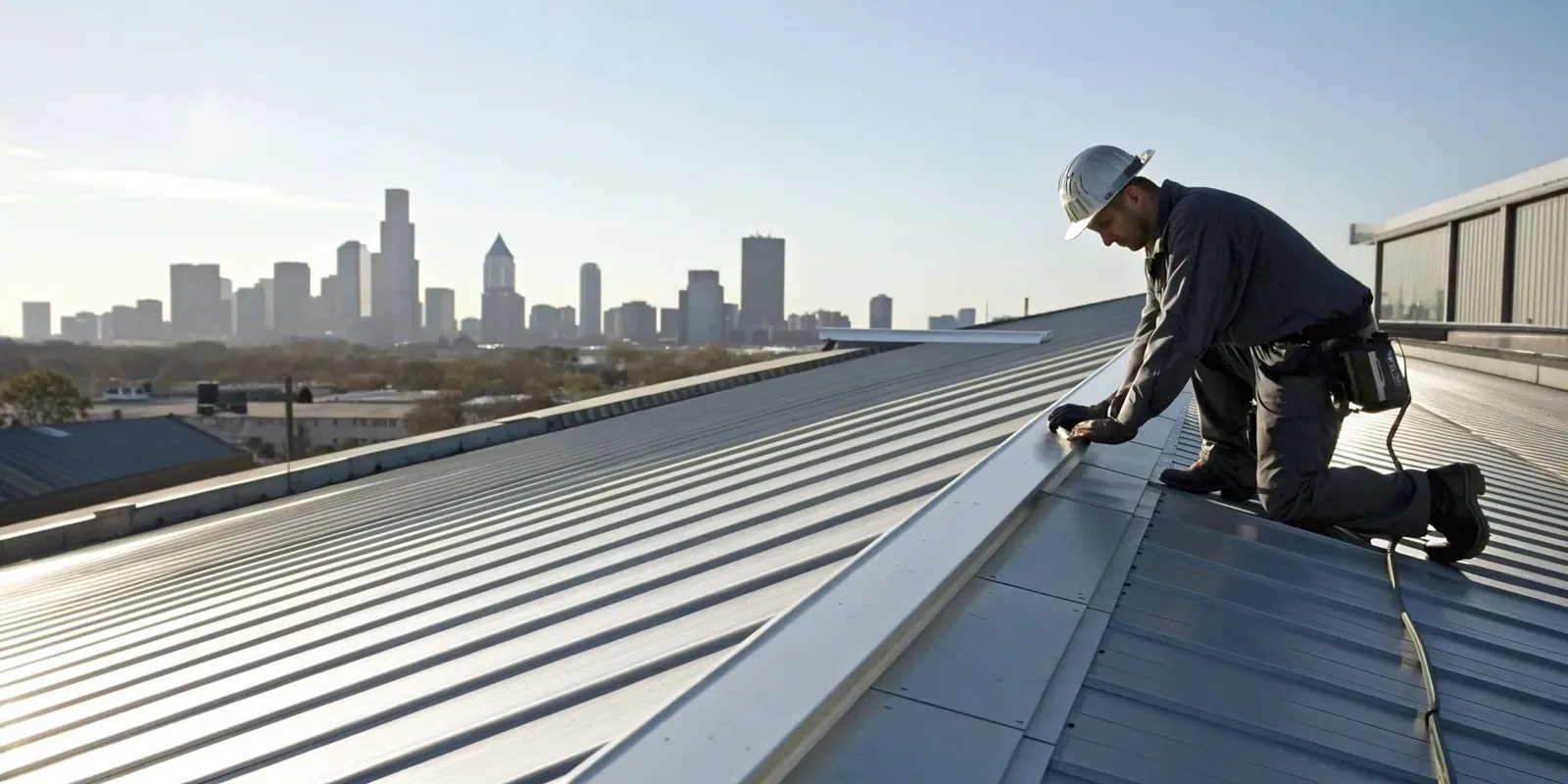 |
The Curb and Its Roof Tie-In
A curb raises rooftop equipment above the membrane, but its corners and seams still carry the weather load. We check the curb height, metal condition, fasteners, membrane termination and flashing at all sides. A wrinkle can direct water toward a corner; vibration may reopen a split. A ceiling stain is a clue, not a roof map, because water can travel along deck or framing.
We also look at the equipment opening and the roof surface around it. A service panel that is difficult to reach can lead to repeated foot traffic across the same membrane. Loose control wiring, condensate lines or abandoned fasteners may leave small punctures. We photograph the curb, identify the assembly and record visible conditions. If readings suggest concealed moisture, an infrared moisture survey can help choose test-cut locations; an image alone does not confirm wet insulation.
When the surrounding roof is stable, a localized flashing repair may be enough. If the curb sits in a broader area of wet insulation or failed membrane, the work boundary has to extend past the visible stain. We compare it with a commercial roof repair scope that includes adjacent seams, drainage and any damaged deck. The proposal separates confirmed defects from untested areas.
Pipe Stands and Equipment Loads
Pipe supports and equipment rails protect the membrane from direct contact, but the load still reaches the roof assembly. We inspect the support feet, bearing pads, attachment points and nearby membrane for crushing, movement or abrasion. A narrow foot can press into insulation over time. A metal edge can scrape the surface when a line shifts. If a support is loose, simply sealing around it leaves the movement in place and may reopen the same detail.
The practical fix depends on what the support carries and how it is attached. We identify where the line can be held without blocking drains or service routes, then coordinate any equipment adjustment with the building contact. Roofing work should not disconnect mechanical service or move a loaded line without the responsible trade. A cover-board and insulation review can help when the support has compressed the layers below it. We document the exact location and identify any work that needs mechanical coordination.
On an office property near Bellevue College or an occupied block around Eastgate, access to roof equipment may cross active suites or shared corridors. We confirm hatch keys, escort needs, shut-down constraints and a safe path for tools before the visit. City planning places Bellevue College among nearby offices and mixed-use development, while I-90 provides a regional access route for these properties. Those details shape access and staging.
Flashing, Fasteners and Repair Limits
For a membrane roof, the repair has to match the existing surface and detail. We remove failed material to a sound edge, prepare the surface, rebuild corners or pipe penetrations, and connect the new flashing to the field membrane. A patch that stops at the stain can leave an open lap just beyond it. We mark the repair boundary and show where the transition lands. On a metal roof, we inspect seams, boots and fastener washers, then distinguish a panel issue from failed sealant at a penetration.
Drainage matters around curbs because equipment can interrupt the route to an outlet. We check for a small pond behind the base, a blocked strainer or a flattened cricket. If water repeatedly sits against the curb, a flashing patch alone may not change the exposure. A drainage correction review can address a low point or outlet separately. Where a larger roof area is deteriorated, a recover assessment can compare retaining sound layers with removing damaged material.
Bellevue's permit plans follow the 2021 International Codes, in force locally from March 15, 2024, along with Washington State and municipal changes. We review the project scope for permit coordination and use the applicable project documents. The code edition does not tell us how an existing curb was attached or whether the deck is sound; field checks and building records answer those questions. For a visible leak, our around-the-clock response is available every day, including holidays, with the first goal of protecting the interior and locating the opening.
Keeping Building Systems Available
Equipment work has two schedules: the roof window and the building system's operating window. We ask which units can remain live, whether a mechanical contact must be present, and how long access to the roof is available. In Downtown Bellevue, a high-rise may require timed freight access and advance staff notice. At Crossroads, tenant and retail activity can influence where a lift or material delivery is placed. We use the property's own access rules rather than assume one building works like another.
Rain timing affects opening and closing. Nearby Sea-Tac normals show much more precipitation in January than July, so the cool season calls for smaller exposed work areas and ready temporary protection. That station is a lowland regional reference, not a forecast for a particular roof. We check current conditions, confirm materials are suitable for the work window and secure each active area before stopping. If a curb repair must pause, the temporary detail should keep water out until the permanent tie-in can be completed.
A Useful Record for the Next Visit
Closeout photos show each repaired corner, pipe boot, support base and the membrane around it. We record the material used, any test opening, the deck condition where visible, and the limits of work. If another room reports a leak after rain, the roof plan gives us a location to compare instead of starting from the ceiling stain alone.
Routine roof maintenance can revisit fasteners, flashing edges, drain strainers and the walking route to each unit. For a BelRed office, a BelRed roof visit may need to account for redevelopment access and active neighboring uses. A photo condition report can keep several curbs and supports in one review, while a compatible TPO detail must preserve the membrane's welded seams and terminations.
Send the Bellevue address, unit or line location, interior symptoms, roof history and access window. We will inspect the curb or support, trace the water path and show which roof repairs can proceed independently from mechanical work.
Commercial Roofing Questions
Can you repair a leak around a live rooftop unit?
The access and equipment requirements decide the sequence. We inspect the curb and surrounding roof, then coordinate any restricted area or mechanical contact before opening the flashing. If the unit must remain on, the work plan keeps that requirement visible.
Why does a leak show up away from the equipment curb?
Water can travel along the deck, insulation joints or framing before it reaches a ceiling. We compare the room location with curb corners, seams, drains and nearby penetrations, then test where the roof evidence points.
Do pipe supports need to be removed for a roof repair?
Some can stay in place while we rebuild the membrane detail; others need coordination because their feet cover damaged material or carry a line that cannot be shifted by the roofing crew. We identify that boundary during inspection.
When is a curb repair too small for the surrounding roof condition?
Wet insulation, loose membrane beyond the base or a low spot that keeps water against the curb can widen the scope. We document the visible defect and any testing needed before comparing a local repair with broader work.
What information helps schedule the first Bellevue visit?
A roof plan, unit number, leak room, recent dates, roof history and hatch access window give us a useful starting point. Include any shutdown or escort requirement so we can plan the inspection around building operations.