

Commercial roof inspection and repair for Bridle Trails, Bellevue. We coordinate access at offices, schools and public facilities and document findings.
A drain below the wooded edge can be hard to reach without crossing a tenant or school access route. In Bridle Trails, the property contact should identify the commercial or public facility, its roof section and the approved way up before the first walk. The area lies between SR 520, I-405, Bellevue’s northern boundary and 148th Avenue NE. We use those boundaries to orient the visit, then follow the actual building’s access and safety rules. The district is largely residential and wooded, with apartments and condominiums along 148th Avenue NE opposite Microsoft’s campus. Some commercial and office uses, a golf course, schools and public facilities sit at the southern edge. Those facts describe the area, not any individual roof. We inspect the specific property and document repair options in Bellevue’s cool-season rain pattern. Start with commercial roof inspection when the condition needs to be established before repair. | 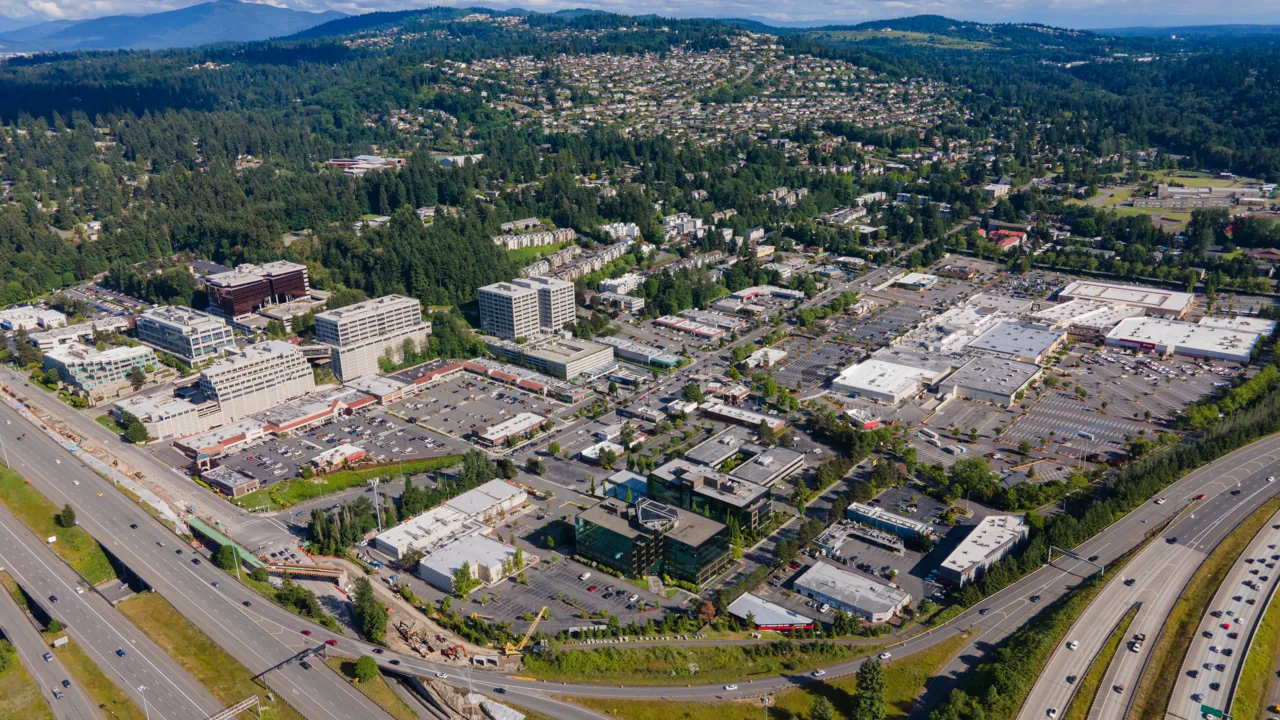 |
Confirm the Building and Authorized Route
A first visit starts with the property manager or facilities contact confirming the address, building name, check-in process and person who can release roof access. Bridle Trails includes housing as well as offices, schools and public facilities, so the operating contact and notice requirements may differ by site. We ask whether a service hatch, ladder or escort is required and where materials may be staged. The roof plan, prior repair notes and reported room help connect the request to the correct section.
SR 520 and I-405 frame the district, while 148th Avenue NE marks part of its edge. Those roads do not determine the driveway, parking rule or delivery route for an individual property. The manager provides those instructions, identifies any school or public hours that affect entry, and names the person who can answer questions about rooftop equipment. If a route is unavailable or an area is not authorized, we note it before inspection so the record does not imply broader coverage than the visit allowed.
Trace Moisture Through Roof Details
When water appears inside, we note the room, timing and weather report from the property contact, then inspect the roof details that could connect to it. Membrane laps, drain bowls, overflow paths, curbs, penetrations, parapet corners and edge metal can all form part of a rain path. A stain may be displaced from the entry point. We photograph conditions and tie each image to a roof area, using a plan if the building has one.
Bellevue’s nearby lowland normal is much wetter in the cool season than in July. That pattern makes drainage and flashing worth checking after a wet period, but it does not prove a defect by itself. We record whether water is visible, whether a drain inlet is clear and whether a transition looks open or disturbed. A visual walk cannot confirm concealed insulation or deck condition. If either could alter the repair boundary, we explain a test location and restoration method before requesting authorization. A condition report with photos can preserve the observations and limits.
Plan Work Around Occupied Uses
Bridle Trails has offices, schools and public facilities near a primarily residential and wooded area. A manager identifies the operating hours, notice period, classroom or service activity, loading route and spaces that must remain available. We coordinate a material path and work zone with that contact, then establish where the crew can secure the roof at the end of each shift. If mechanical equipment needs shutdown or movement, the owner schedules an authorized technician; roofers do not operate building systems.
Before a larger repair or renewal, the work plan should say which roof area opens first, how it will be protected if the shift ends early and who approves a change to the sequence. A school calendar or public counter schedule may affect access when the facility contact says it does. Tenant notices, parking limits and delivery timing can add coordination time even when the roof work itself is straightforward. We put those dependencies in the scope so the manager can set a realistic work window and keep affected occupants informed.
Compare Local Repair With Wider Renewal
A puncture or open membrane lap can be repaired locally when surrounding material is sound enough for a compatible tie-in. We inspect nearby seams and penetrations rather than treating the visible mark as the entire defect. If the same condition appears at several details, or water may have moved beneath the surface, we identify what further inspection could change the scope. The written recommendation distinguishes observed damage from suspected conditions.
A replacement assessment can review existing layers, insulation, drainage, attachment and deck exposure when a broader project is under consideration. EPDM roofing may be considered with other systems only after the actual roof and design needs are understood. Cost and timing depend on the area involved, material handling, site access, occupied hours, weather protection and any testing needed before work begins. If a property has several roof zones, the estimate should mark which are included and which need separate approval.
Keep Findings Tied to the Right Facility
Each building should retain its own roof map, access instructions, photographs, repair notes and open recommendations. A school roof, office section and public facility may have different contacts and operating limits even when a portfolio manager coordinates all of them. We label the property and roof area on the report, note what could not be reached and identify who should receive the next status update.
If the manager also oversees Somerset or Overlake, those inspections can be scheduled separately with their own access approval. A portfolio roof program can coordinate dates and open items while preserving each property’s findings. The Bridle Trails neighborhood’s residential and wooded character does not answer questions about the commercial building’s roof history; its records and current inspection do.
Record the Work and Any Remaining Limits
Closeout lists the address, roof section, reported issue, observations, work completed and any recommendation that remains open. If authorized testing finds wet insulation or a deck concern, the report identifies where the sample was taken and how the opening was restored. If access restrictions left a portion unseen, we name that area and the approval needed for another visit. This gives the facility team a clear distinction between inspected surfaces and questions that still need attention.
For a Bridle Trails property, send the Bellevue address, roof drawings if available, leak location, previous repairs, facility schedule and access contact. Note whether SR 520 or I-405 approaches are relevant to the site instructions, while confirming the actual parking and entry rules with the manager. We will inspect what is authorized, document the visible condition and identify whether repair, testing or a larger assessment is supported by the evidence at that building.
Commercial Roofing Questions
Do you work on offices and public facilities in Bridle Trails?
Yes. We confirm the property, operating contact and approved roof route, then document the areas we can access and any limits.
How should a school prepare for a roof inspection?
The facility contact can provide the access window, notice rules, roof plan and person authorized to release entry. We coordinate the route and keep the inspection within approved areas.
Does a wooded setting change what you inspect?
The building’s actual condition controls the inspection. We check drainage, seams, penetrations and edges related to the reported concern, then document what is visible without assuming a cause from the surroundings.
Can you work near an occupied apartment or office?
We plan the staging area, tenant notice and roof route with the manager. A phased scope can identify work areas and a secure stopping condition for each shift.
What details help set a repair boundary?
A roof plan, leak timing, interior location, earlier repair notes and access to the affected section help us connect the report with visible roof conditions.