

Shopping center roofing in Bellevue needs clear tenant access, drain checks and phased work. We document leaks, repairs and replacement options.
Water spotting a retail floor puts stock, tenant operations and customer access into the same conversation. We start with the exact suite, interior symptom and hours when the manager can provide access. Then we inspect the roof detail above, check nearby drains and seams, and photograph the conditions that matter. In Bellevue’s wet season, a small defect can keep returning if the source is not traced beyond the ceiling mark. The Crossroads district brings stores, dining, services and entertainment together near apartment complexes and established neighborhoods in east Bellevue. Factoria is part of the Eastgate and Factoria business district, where suburban offices sit near a large public college. A center’s tenants, delivery lanes and customer paths vary by property. We also ask whether any tenant has reported a recurring ceiling mark or prior patch. We confirm those details before comparing commercial roof repair with a broader project. | 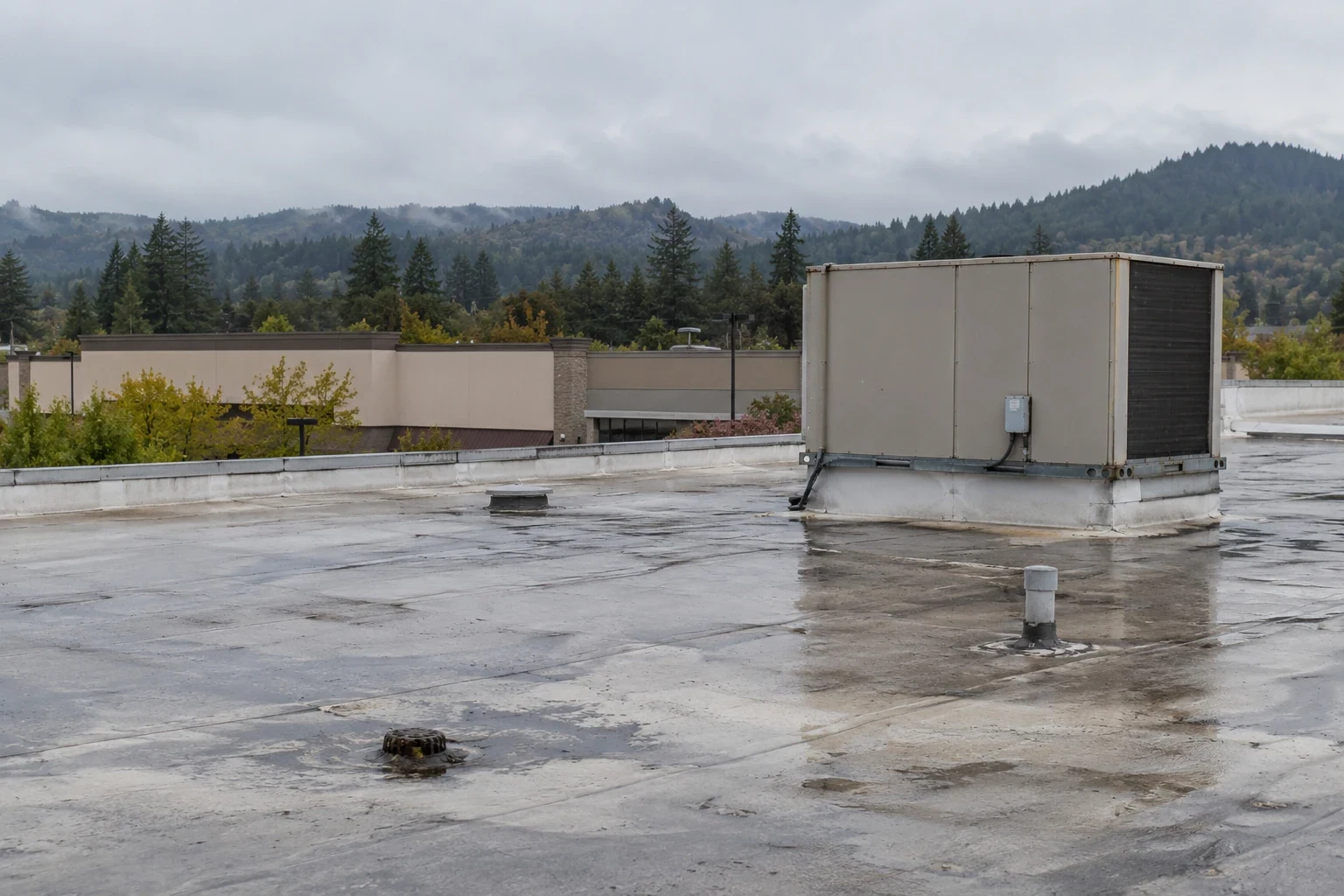 |
Trace the Leak Across the Tenant Space
Water inside one store may travel along the deck before it appears, so we ask where the first mark formed and whether it changes during rain. A roof plan can help map that report to seams, drains, parapets and equipment curbs. We inspect the likely route and adjacent membrane, then record whether we found a visible opening, loose flashing or standing water. If the source is not confirmed, the manager gets a clear note about what should be tested next.
Storefront improvements can add signs, lighting, conduits or exhaust equipment, and each roof opening needs sound flashing. We look for abandoned penetrations, patches around newer curbs and wear along service paths. A wet ceiling does not prove that the entire roof area has failed. When repeated leaks or test results indicate a wider issue, a replacement assessment can set a defined scope and tenant sequence. We keep a localized repair option available when the surrounding assembly remains serviceable.
Phase Work Around Store Hours
Before mobilization, we ask about store opening times, deliveries, trash pickup, food service, customer entrances and any tenant spaces that cannot be disturbed. The property manager confirms where the crew can stage materials and which walkways or parking areas must remain open. For larger work, the roof can be split into sections with a dry-in plan and a protected stopping point by shift close. If weather shifts, the crew closes the exposed area before leaving.
A center in Crossroads sits beside apartments and single-family neighborhoods, while Downtown Bellevue has a dense mix of offices, hotels, retail and high-rise buildings. Those surroundings can affect deliveries or customer movement, so we confirm the schedule with the property contact. A Crossroads roof visit begins with the center’s actual loading and tenant rules, not a default assumption about retail hours.
Check Drains, Curbs and Shared Roof Details
Large shared roofs often have several tenants below a continuous membrane field. Drains, scuppers, parapets, mechanical curbs and utility lines may serve more than one suite. We check strainers, bowls, overflow paths, low areas and flashing details near the reported location. If a drain is restricted or the surface holds water, that condition is documented separately from the seam or penetration suspected of leaking.
When new roofing changes finished height, drain connections, edge metal and curb flashing must still meet the membrane. We review those transitions before pricing a recover or replacement. If a tenant added equipment, the property team may need to confirm who owns the curb or line before repairs proceed. A targeted drain and scupper service can be included where drainage contributes to recurring moisture, with its limits included in the closeout notes.
Choose Repair or Replacement from the Evidence
A localized patch may work when the defect is clear and surrounding membrane, attachment and insulation remain sound. We check adjacent seams and note any wet or soft areas. If failures recur at several tenants, we compare repair history and test results to see whether a broader roof section needs attention. That lets the owner prioritize active leaks without losing sight of future capital work.
A recover is considered only if existing layers are dry and stable and the added height fits drains, edges and rooftop equipment. For a store with a large sales floor and substantial delivery needs, the work plan may resemble big-box retail roofing. A food retailer has refrigeration and delivery constraints to consider, as with grocery store roofing. In every case, the roof assembly defines the technical scope while tenant activity shapes the schedule.
Leave a Roof Record for the Property Team
After work, the manager should have photos, the location, repair materials and a clear description of any condition left unverified. A map showing drains, equipment and completed patches helps future vendors find the same detail. If moisture testing was performed, the record identifies where it occurred and whether the opening was restored. Those notes support tenant follow-up and reduce repeat investigation. A property manager can share the same roof map when a new tenant reports a leak or when seasonal maintenance is planned.
A roof condition report can group findings by building or tenant zone for a portfolio review. If a replacement is warranted, we can compare systems such as TPO roofing after checking deck, insulation, attachment and drainage. Send the Bellevue address, affected suite, tenant hours, loading restrictions and roof history. We will inspect the related details and document a repair boundary or the next test needed.
Commercial Roofing Questions
Can shopping center roof work happen while stores are open?
Often, when the manager approves access and staging and the crew can keep customer paths and tenant entrances clear. We confirm store hours, deliveries and any restricted spaces before starting. Larger removal may need phases or an agreed off-hours window.
How do you trace a leak over one tenant space?
We start with the suite and reported symptom, then compare it with the roof drains, seams, curbs and perimeter details above. Water can travel before it reaches the ceiling. We document visible conditions and identify testing if the extent of moisture remains uncertain.
Does a leak in one store require replacing the whole center roof?
Not by itself. We inspect around the defect and check whether the adjacent assembly remains serviceable. Repeated failures across several zones or verified wet insulation may support a larger scope, which we explain separately from an isolated repair.
What tenant information helps schedule roofing work?
Share opening hours, delivery times, restricted rooms, customer routes and any special tenant requirements. The property manager should also provide roof access rules and a staging point. Those details help us set a work zone and protect daily operations.
Can you repair drains and roof penetrations during the same visit?
Yes, if the findings and approved scope include them. We inspect drains, curbs and nearby membrane, then document which items are confirmed defects. Any added work is described for approval before the crew expands the repair boundary.