

Commercial roof inspection and repair after fire or heat exposure for Bellevue buildings, with clear scope and safe access coordination.
After a rooftop or building fire, the roof may have heat damage, an opening made for emergency access, water exposure from suppression or debris that needs a separate cleanup team. We inspect the roof assembly that can be safely accessed and document visible conditions without making conclusions about structural safety or hazardous materials. The report identifies damaged areas, temporary protection needs and questions for the owner’s fire, engineering or environmental professionals. Downtown Bellevue’s office and mixed-use buildings, the Spring District and Factoria’s commercial properties have different access and operating requirements. A fire response can also involve several building contacts and contractors. We coordinate the roofing inspection with the authorized site representative first before preparing the written commercial roof repair. | 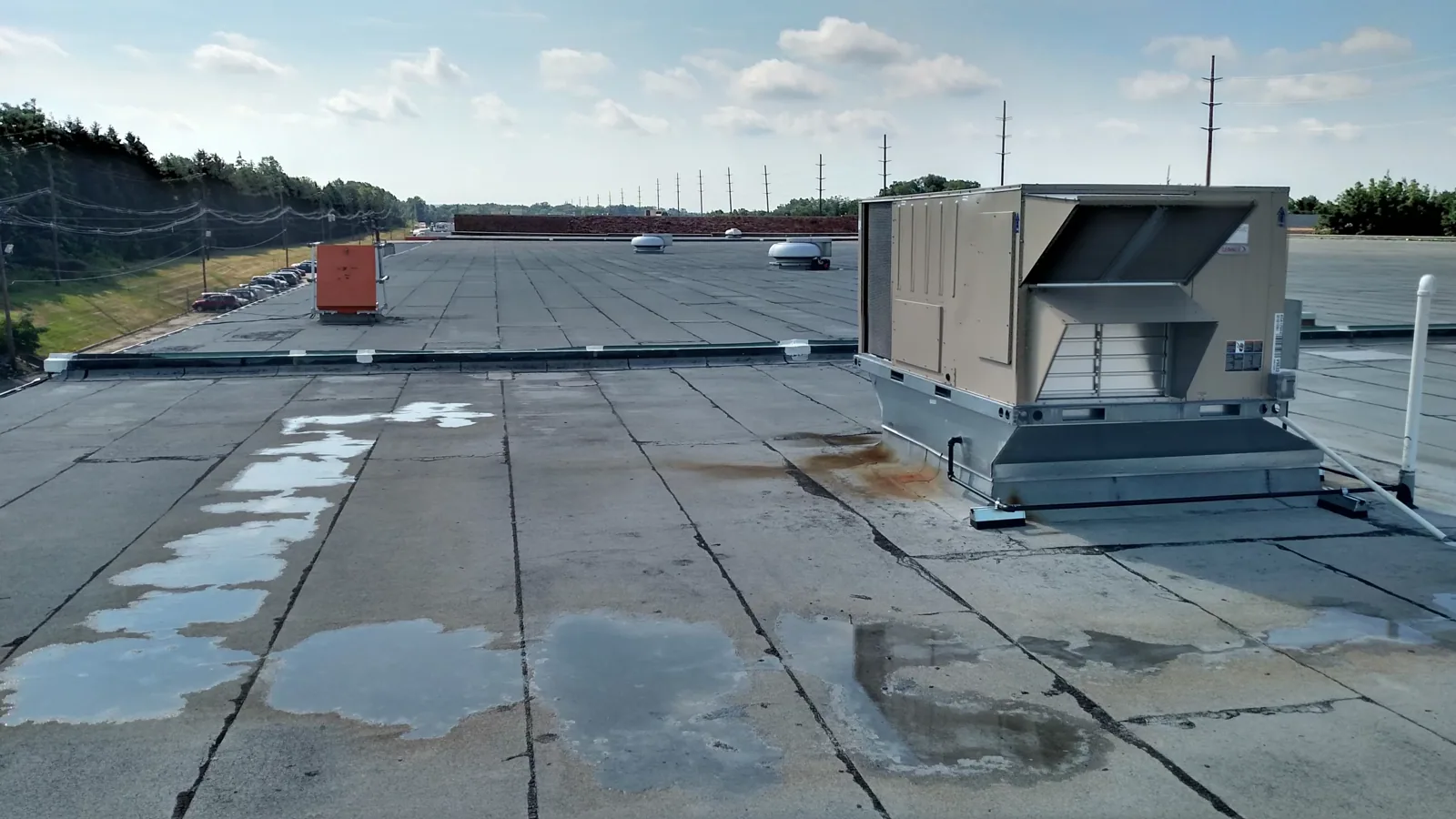 |
Confirm the Building Is Released for Roof Access
Before inspection, the owner or incident lead confirms that responders have cleared the area and that roof access is allowed. We follow the building’s safety direction and do not enter a restricted space or make a structural assessment. If the roof, parapet, deck or access ladder may be unstable, the owner’s qualified engineer or safety professional determines when work can proceed. We can identify the area needing roofing review once the property authorizes entry. The incident lead can also share any restricted zones or protective equipment instructions.
The site contact should also identify fire-damaged equipment, active utilities, smoke restrictions, debris hazards and any environmental or industrial hygiene protocols. Roofing crews do not remove hazardous materials or operate fire-damaged systems. If a mechanical unit, conduit or rooftop service requires isolation, the authorized building technician controls that work. These boundaries are documented before any temporary cover or permanent repair is attempted.
Separate Heat, Suppression Water and Existing Conditions
We inspect the roof surface, seams, flashings, penetrations and edge details around the affected area. Notes distinguish visible scorching, blistering, melted material, punctures, displaced metal and water accumulation. Fire suppression can introduce water into an assembly, while firefighting access may create cuts or removed sections. We record those observations by roof zone and do not treat all wet material as fire damage without a supporting inspection.
Where concealed moisture or deck condition affects the scope, a test may be proposed after the owner authorizes it and confirms the restoration method. We photograph the opening, identify the sampled area and state what the test did or did not establish. If a sharp cut or impact is found, a membrane puncture repair can describe that detail separately. The inspection can also note unrelated pre-existing wear when it is visible beside the damaged area.
Protect Exposed Areas While the Scope Develops
If the roof has an opening and access is approved, temporary weather protection may be needed while the owner assembles the permanent repair team. We define the area that can be covered, the condition of the surrounding material and what follow-up remains. A temporary cover is not described as restoring the full roof or proving that concealed areas are dry. The owner coordinates interior protection and any notices needed for occupied floors below. Temporary weather protection should be checked after installation and after later rain, especially if another trade still needs to complete work near the opening. We agree who will inspect it, how access will be arranged and what condition requires an urgent call back. These details keep interim measures visible to the facility team while the permanent repair scope is being reviewed.
Some openings or penetrations may require a structural or mechanical review before roofing can close them. The project contact identifies the responsible professional and the point when roofing can resume. For a larger area, a replacement assessment may be needed to define removal, deck exposure and dry-in sequence. We keep that decision separate from a limited temporary protection scope so the owner can review both on their own merits.
Rebuild the Roof Detail With the Right Trades
A permanent repair depends on whether the membrane, insulation, deck, flashing or edge components have been affected and which adjacent work is complete. We identify the materials and interfaces that can be restored by the roofing crew, as well as items that require a structural engineer, mechanical contractor or environmental specialist. The repair boundary is agreed with the owner before removal extends beyond the documented area.
Once the substrate is ready, the roof detail is rebuilt with compatible materials and a tie-in to sound surrounding assembly. If flashing or metal edges were displaced, a flashing repair scope can specify those components. We coordinate inspection hold points with the GC or restoration manager so concealed work can be reviewed before it is covered. Progress photos show the condition exposed and the completed roof closure.
Create a Clear Post-Incident Roof Record
The closeout file can include the roof area inspected, visible fire or suppression-related conditions, temporary protection, permanent work and remaining limitations. Photos are labeled by section and date. Any approved test opening is recorded with the finding and restoration. If a portion of the roof remained inaccessible, the record says so and identifies what approval or specialist review would be needed for another visit. A dated photo list helps the owner connect roofing documentation with incident and restoration files, while keeping roof observations distinct from decisions made by other professionals.
A roof condition report can help the owner track unrelated visible needs separately from the fire-repair scope. Downtown Bellevue includes a dense commercial building base, and the Spring District combines offices, housing, retail and public spaces; these property contexts make access coordination important, but the building’s incident plan controls. A Bellevue Eastgate roof inspection follows the same access release and owner coordination. Send the address, release status, incident contact and available roof plans. We will document the roofing work that can be safely evaluated and the next decision required.
Commercial Roofing Questions
Can you inspect the roof immediately after a fire?
Only after the owner or incident lead confirms the area is released for roof access. Restricted, unstable or hazardous locations require clearance from the appropriate safety or technical professional.
Do you remove smoke residue or hazardous debris?
Our roofing scope does not include hazardous-material removal or environmental cleanup. The owner should coordinate qualified cleanup before roofing work proceeds where required.
Can fire suppression water damage the roof assembly?
It may affect roof materials or interior areas, but the extent needs inspection. We document visible conditions and identify whether testing is needed to evaluate concealed moisture.
Will you provide photos and repair records?
Yes. The report can label photographs by roof zone and date, describe the work performed and identify any limitation or follow-up that remains.
What should we prepare before requesting an inspection?
Share the address, incident contact, confirmation that access is authorized, any safety restrictions, roof plans and the location of observed damage. Identify other specialists already working on site.